Wholesale Natural Rubber Baby Toys for Retailers & Baby Brands
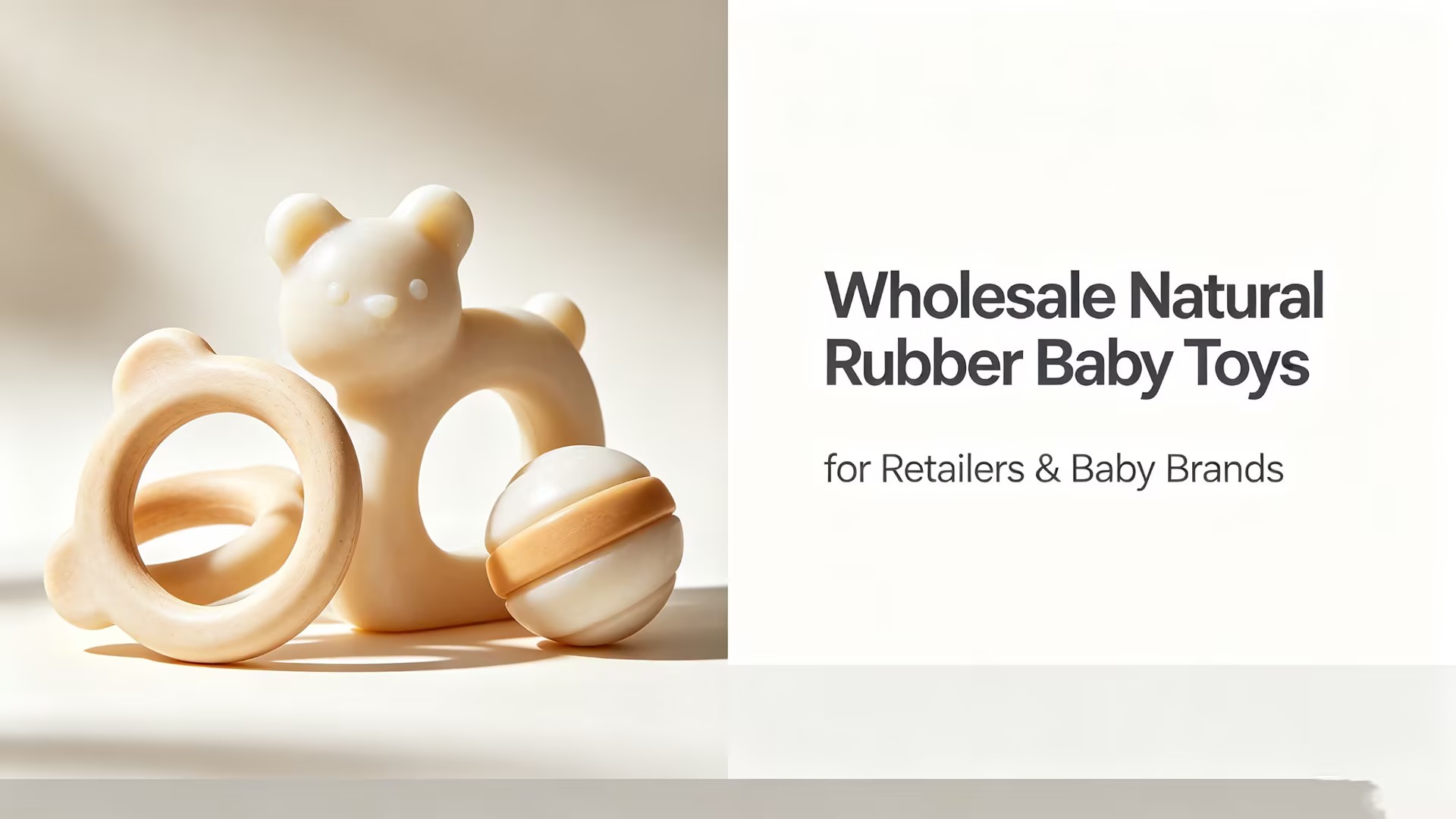
The global baby toy market is shifting. Parents are reading labels more carefully than ever, asking where products come from, what they are made of, and whether the materials truly match the marketing claims on the box. For retailers, baby boutiques, distributors, and emerging brands, this shift creates a clear opportunity: wholesale natural rubber baby toys are no longer a niche category. They have become a core product line that signals quality, safety, and environmental responsibility.
Natural rubber — sourced from the sap of Hevea brasiliensis trees — offers a material story that synthetic alternatives simply cannot match. It is biodegradable, naturally elastic, free from BPA, PVC, and phthalates, and carries a tactile warmth that babies respond to from their earliest months. When you source wholesale natural rubber baby toys from a specialized manufacturer, you gain access to a complete product ecosystem: teethers, sensory toys, bath toys, educational toys, pacifiers, and fully custom designs — all built around one trusted material.
This guide walks through everything a B2B buyer needs to know before placing a wholesale order, from product categories and MOQ structures to packaging options, OEM and private label services, and the quality control standards that separate reliable suppliers from the rest.
Why Natural Rubber Is Winning the Baby Toy Category
Parents today are more informed. Surveys of baby product buyers consistently find that over two-thirds of parents actively check for "BPA-free" and "non-toxic" labels before purchasing a toy for a child under three. Natural rubber answers these concerns at the material level: it is a plant-based substance that does not require petroleum-derived plasticizers to achieve softness. Unlike silicone, which is synthetic despite being marketed as "food-grade," natural rubber decomposes naturally at the end of its lifecycle, reducing landfill impact.
For retailers, this translates into stronger sell-through. Products with a clear natural-material story tend to command higher price points, generate more positive reviews, and build repeat customer loyalty. A parent who buys one natural rubber teether and is satisfied with the quality is far more likely to return for a bath toy, a pacifier, or a gift set — especially if your store offers a cohesive collection rather than isolated items.
The manufacturing journey itself is part of the appeal. From the early-morning tapping of rubber trees in Southeast Asian plantations to the finished, hand-finished toy on a retail shelf, every step carries a narrative that brands can leverage in their marketing. Learn more about this remarkable journey from tree to toy, and you will see why the material story resonates so strongly with conscious consumers.
Product Categories: Building a Cohesive Wholesale Collection
A strong natural rubber baby toy assortment does not rely on a single hero product. It spans the full arc of early childhood development, from newborn sensory exploration to toddler bath time and beyond.
Natural Rubber Teethers
Teethers are the entry point for most natural rubber toy lines. When babies begin teething — typically around six months, though some start earlier — they need something safe, soft, and resilient to chew on. Natural rubber's elasticity makes it ideal: it yields under gum pressure without tearing, and its natural antibacterial properties reduce contamination risk.
Wholesale natural rubber teethers come in a wide range of designs. Animal shapes — elephants, giraffes, unicorns, sloths — are perennial bestsellers because they double as comfort objects. Ring-style teethers are easy for small hands to grip. Fruit and vegetable shapes (kiwi, banana, strawberry) tap into the "fresh, natural" aesthetic that performs well on social media.
When evaluating teether suppliers, pay attention to surface texture. Multi-textured surfaces — raised dots, ribbed edges, smooth contours — provide more varied gum stimulation. Also confirm that any colored elements use food-grade, non-toxic paint, as this is a common area where lower-quality manufacturers cut corners.
Sensory Toys
Sensory development begins at birth. Newborns explore the world through touch, sound, sight, and taste, and the right sensory toys support cognitive and motor development from the earliest weeks. Natural rubber sensory toys leverage the material's unique properties — its softness, its slight surface friction, its ability to be molded into complex textures — to create rich, multi-sensory experiences.
Common formats include textured balls with raised bumps and ridges, rattle-integrated rubber figures that produce gentle sound when shaken, and high-contrast designs that capture newborn visual attention. Some sensory toys combine multiple elements in one product — a squeezable body, a teething corner, a textured surface — making them exceptional value.
For buyers targeting the newborn segment, toys designed for 0–3 months need to be lightweight, easy to grasp, and free from any small parts or hard edges. This guide to safe and sensory-rich natural latex toys for newborns 0–3 months provides a detailed framework for curating an age-appropriate collection.
Bath Toys
Bath time is one of the most consistent play rituals in early childhood, and natural rubber bath toys have a distinct advantage: they do not trap water inside. Traditional plastic bath toys often have a small hole that allows water to enter, creating a dark, moist interior where mold and bacteria can grow. Parents know this frustration well.
Quality natural rubber bath toys are designed as sealed, one-piece constructions. No holes, no seams that can split, no interior cavity where mold can develop. They float, they are squeezable, and they are easy to clean with a simple wipe-down. Animal designs — penguins, sheep, marmots, ocean creatures — are especially popular because they encourage imaginative water play.
When sourcing bath toys wholesale, confirm that the products are truly mold-resistant by design rather than by chemical treatment. A well-engineered sealed toy does not need antimicrobial coatings. Also verify that the toys meet water-contact safety standards, as bath toys face additional regulatory scrutiny in many markets.
Educational Toys
Educational natural rubber toys bridge the gap between play and learning. These products are designed with specific developmental outcomes in mind: shape recognition, color sorting, fine motor skill building, cause-and-effect understanding, and early counting. Because natural rubber can be molded into precise, durable forms, it works well for educational toys that need to withstand repeated handling.
Popular formats include stacking rings with graduated sizes, shape-sorting cubes with rubber cutouts, counting beads on a flexible frame, and alphabet or number blocks with raised, tactile surfaces. The best educational toys are open-ended — they can be used in multiple ways as a child grows — and they integrate sensory elements to reinforce learning through multiple channels.
For retailers, educational toys are an excellent upsell category. Parents who come in for a teether often leave with an educational toy if the collection is well-merchandised and the developmental benefits are clearly communicated. Explore how the best natural baby toys support early development for insights on curating a collection aligned with real developmental milestones.
Pacifiers
Natural rubber pacifiers (also called soothers or dummies) are a specialized but high-demand category. Unlike silicone pacifiers, which dominate the mass market, natural rubber pacifiers offer a softer, more breast-like texture that many babies prefer. The material's elasticity mimics the feel of human skin more closely than silicone, which can feel firmer and less yielding.
Wholesale natural rubber pacifiers are available in several nipple shapes: orthodontic (angled to support proper jaw development), round (traditional cherry-style), and flat (designed for babies with specific sucking preferences). The shield should be large enough to prevent the pacifier from being fully inserted into the mouth, and it should feature ventilation holes to reduce skin irritation.
When sourcing pacifiers, compliance is critical. Pacifiers are classified as children's products in most jurisdictions and are subject to strict safety standards including ASTM F963 in the United States and EN 71 in the European Union. A reputable supplier will provide test reports for every model and demonstrate compliance with nipple strength, shield ventilation, and labeling requirements.
Custom Products
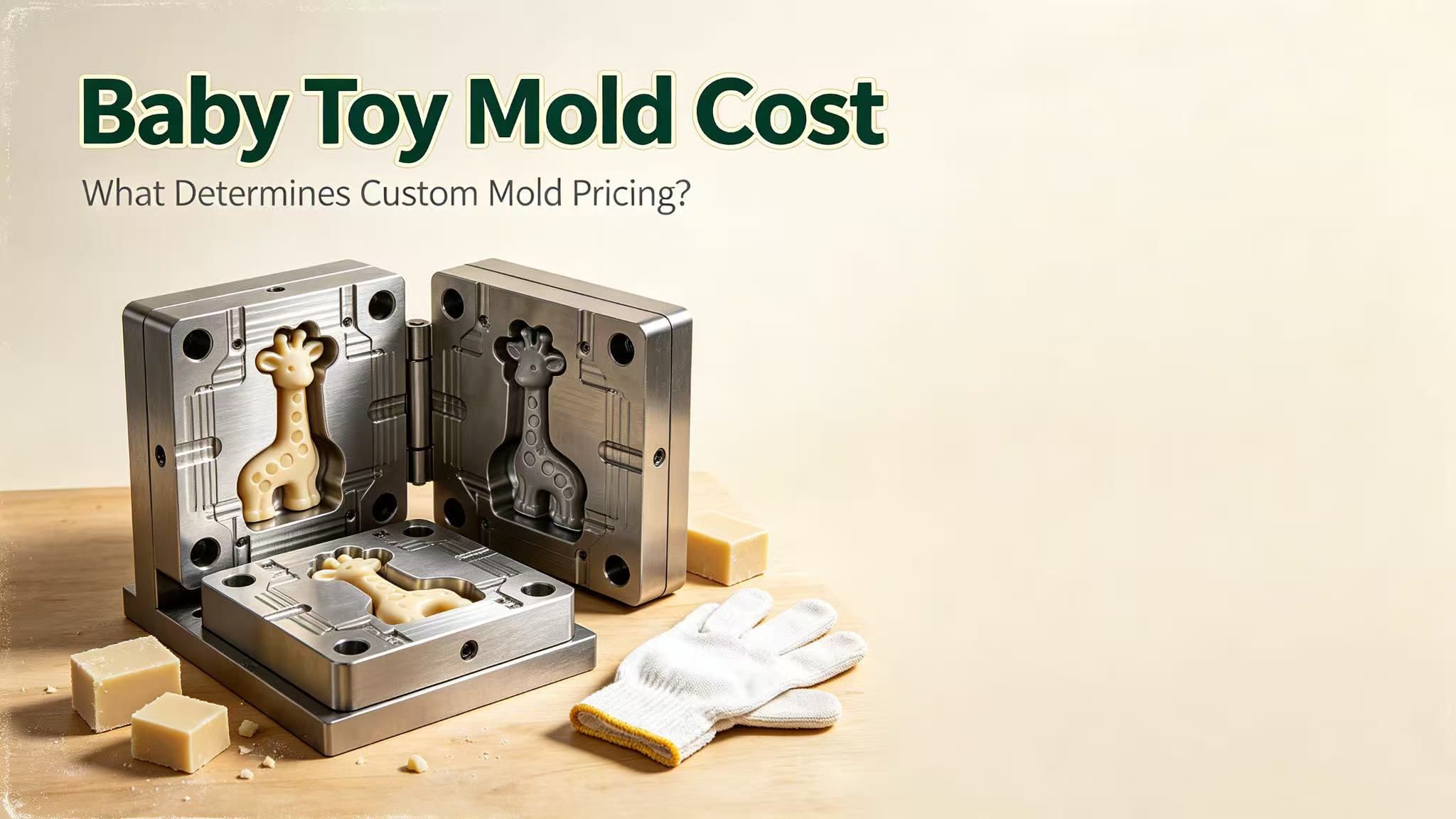
For baby brands that want to differentiate themselves, custom natural rubber products are where the real competitive advantage lies. A specialized manufacturer with in-house R&D and mold-making capabilities can turn your concept — a unique animal character, a branded shape, a proprietary texture pattern — into a production-ready toy.
Custom projects typically follow a clear workflow: concept discussion and sketching, 3D modeling and prototyping, mold creation, sample production, testing and certification, and finally mass production. Most custom natural rubber toys can move from concept to first samples within 4–8 weeks, with full production following 30–45 days after sample approval.
The key advantage of working with a manufacturer that handles the entire process in-house is consistency. When R&D, mold making, production, and quality control all happen under one roof, there are fewer handoff points where details can be lost or quality can slip.
MOQ: Understanding Minimum Order Quantities
Minimum order quantity (MOQ) is one of the first questions B2B buyers ask, and it is also one of the most misunderstood. MOQ is not arbitrary — it reflects the economics of manufacturing, particularly for products that require custom molds, specialized production runs, or compliance testing.
For standard, in-stock natural rubber baby toy designs, MOQs are typically lower, often starting at 500–1,000 pieces per style. This makes it feasible for smaller retailers and boutique brands to test a product line without committing to large inventory. For custom designs that require new mold tooling, MOQs are generally higher — often 1,000–3,000 pieces per style — because the manufacturer needs to amortize the mold cost and set up a dedicated production run.
It is important to look at MOQ in context rather than in isolation. A lower MOQ from a supplier with inconsistent quality may end up costing more in returns, reputational damage, and lost customers than a slightly higher MOQ from a reliable partner. Similarly, a supplier that offers flexible MOQ structures — allowing you to combine multiple styles under one order to reach a volume threshold — can be more valuable than one with rock-bottom per-style minimums but rigid ordering rules.
When negotiating MOQ, consider your total annual volume. If you can commit to a larger total order across multiple product lines or multiple shipments throughout the year, many manufacturers will offer reduced per-style minimums or better unit pricing.
Packaging: First Impressions and Retail Readiness
Packaging does more than protect a product during shipping — it is your customer's first physical touchpoint with your brand. For natural rubber baby toys, packaging should communicate three things immediately: safety, natural origin, and brand identity.
Common packaging options include:
- Blister packs and clamshells. These clear packages allow the product to be fully visible, which is advantageous for toys where design and color are key selling points. However, they are less eco-friendly. If you choose this format, look for recyclable or PET-based materials.
- Kraft paper boxes and hang tags. For brands positioning themselves as natural and eco-conscious, kraft paper packaging with soy-based inks is a popular choice. It aligns with the natural rubber material story, is recyclable, and can be printed with product information, safety certifications, and brand messaging.
- Gift boxes and sets. For premium positioning or holiday gifting, custom gift boxes with inserts that hold multiple products can command significantly higher retail prices. These are especially popular for baby shower gifts and seasonal promotions.
- Eco-friendly and plastic-free options. As sustainability becomes a stronger purchasing driver, many brands are moving toward fully plastic-free packaging: paper sleeves, compostable bags, seed-paper tags that can be planted. These options reinforce the natural rubber story and appeal to the most eco-conscious segment.
When discussing packaging with your manufacturer, confirm that all required regulatory labeling can be accommodated — age grading, choking hazard warnings, manufacturer information, country of origin, material composition, and certification marks. In the EU, CE marking and relevant EN 71 references must appear on packaging. In the US, tracking label information and ASTM F963 compliance statements are required.
OEM: Original Equipment Manufacturing for Baby Brands
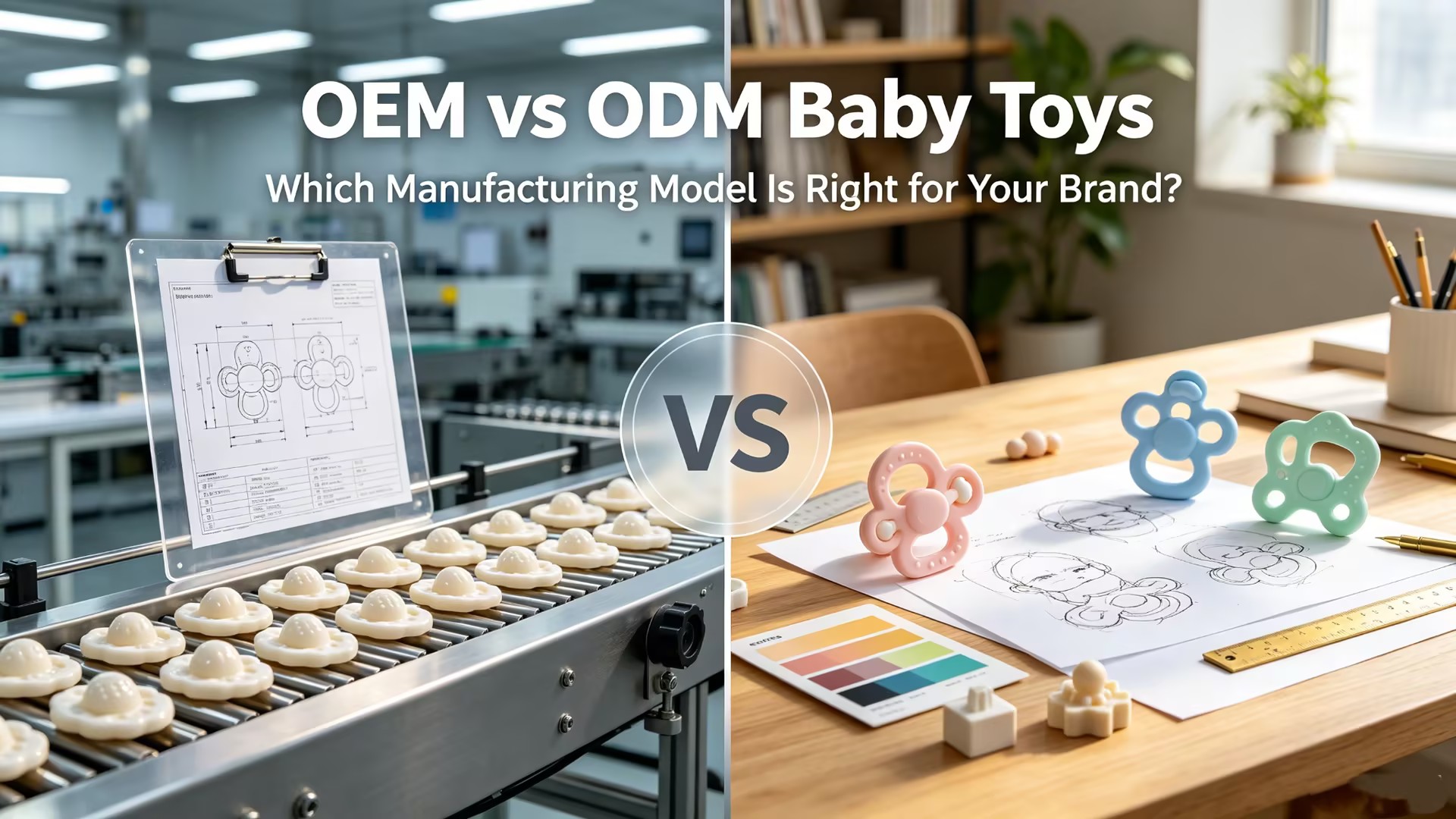
OEM (Original Equipment Manufacturing) is the most common partnership model for baby brands that want to sell natural rubber toys under their own brand name without investing in their own factory. The manufacturer produces products — either from their existing design catalog or based on your specifications — and you brand them as your own.
The OEM model offers several advantages: speed to market (you can launch in weeks rather than months), lower upfront investment (no factory equipment or production staff needed), proven quality (reputable manufacturers have refined processes and tested products), and scalability (production can grow with your demand).
When evaluating OEM partners, look beyond the product catalog. Ask about R&D capabilities — can they modify existing designs to meet your requirements? Ask about capacity — what is their maximum monthly output? Ask about compliance documentation — can they provide test reports and audit results? And ask about communication — do they have English-speaking account managers?
Learn more about what makes a reliable OEM natural rubber baby toys manufacturer and why choosing the right partner is the foundation of a successful product line.
Private Label: Building Your Brand Identity
Private label takes OEM a step further. While OEM can involve branding an existing product, private label typically involves deeper customization: your brand's logo on the product itself, custom color palettes, exclusive packaging designs, and sometimes modified product features that differentiate your line from the manufacturer's standard catalog.
For baby brands, private label is a powerful tool for building recognition and loyalty. When a parent buys a natural rubber teether with your logo embossed on it, they are buying into your brand. If the experience is positive, they will seek out your brand for future purchases.
Private label customization options include:
- Logo embossing or debossing. Natural rubber can be embossed with your brand logo during the molding process, creating a permanent, tactile mark that does not wear off.
- Custom colors. While natural rubber is naturally beige or light amber, it can be pigmented with food-grade, non-toxic colors to match your brand palette.
- Exclusive shapes and designs. For brands that want a truly unique product, private label can include custom mold creation, giving you exclusive rights to the design.
- Branded packaging. Private label almost always includes custom packaging with your brand's visual identity: logo, color scheme, typography, and brand messaging.
The investment level varies depending on the depth of customization. Logo embossing on an existing design with custom packaging is relatively accessible. Custom molds with exclusive designs require a larger upfront investment but offer the greatest competitive differentiation.
Quality Control: Non-Negotiable Standards for Baby Products
Quality control is where the difference between a trustworthy supplier and a risky one becomes most apparent. For baby products — especially toys that go directly into a child's mouth — there is no margin for error. A single quality failure can result in a product recall, regulatory penalty, negative reviews, and lasting brand damage.
A reputable manufacturer implements quality control at every stage:
- Raw material inspection. Natural rubber latex should be tested for purity, protein content (for allergen management), and absence of contaminants. Reputable manufacturers source from certified plantations and maintain traceability records.
- In-process quality checks. During production, QC inspectors monitor molding temperature and pressure, curing time, dimensional accuracy, surface finish, and color consistency. Random sampling at each stage ensures issues are caught early.
- Finished product inspection. Every batch undergoes comprehensive inspection before packaging: visual checks for defects (bubbles, tears, discoloration), dimensional verification, functional testing (squeezability, floatation, nipple strength), and labeling verification.
- Safety and compliance testing. This is the most critical layer. Finished products must be tested against relevant standards:
- ASTM F963 (US): physical and mechanical properties, flammability, migration of certain elements.
- EN 71 (EU): mechanical and physical properties, flammability, migration of elements, organic chemical compounds.
- CPSIA (US): third-party testing for children's products, limits on lead and phthalates.
- REACH (EU): restriction of hazardous chemicals.
- FDA 21 CFR (US): relevant for products intended for oral use, such as pacifiers and teethers.
A reliable manufacturer will have an in-house QC lab and partner with accredited third-party laboratories (SGS, Intertek, TÜV) for formal certification. They should provide test reports on request and share QC process documentation during supplier evaluation.
For B2B buyers, the key question is not "do you have quality control?" — every supplier will say yes. The question is "can you show me your quality control process, your test reports, and your inspection records?" A manufacturer that can produce detailed, current documentation is one that takes quality seriously.
Discover why uncompromising quality and safety assurance is the foundation of a trusted natural rubber baby toy manufacturer, and what certifications and processes you should expect from your supplier.
How to Choose the Right Wholesale Partner
With so many manufacturers offering natural rubber baby toys, choosing the right partner can feel overwhelming. Here is a practical framework:
- Start with compliance. Before discussing pricing or MOQ, verify that the manufacturer can provide valid, current test reports. If they cannot or will not share compliance documentation, move on.
- Evaluate product range and depth. A manufacturer with a broad catalog — covering teethers, sensory toys, bath toys, educational toys, pacifiers, and custom options — gives you room to grow without switching suppliers.
- Assess R&D and customization capabilities. If you plan private label or custom products, confirm the manufacturer has in-house R&D, 3D modeling, and mold-making. Outsourcing adds cost, complexity, and risk.
- Review production capacity and lead times. Ask about monthly capacity, current backlog, and typical lead times for both standard and custom orders.
- Check communication. Note how quickly the supplier responds and how thoroughly they answer questions. Good communication during sales is a strong indicator of how the partnership will function.
- Request samples. Always order physical samples before committing. Evaluate quality, texture, finish, and packaging firsthand. If possible, have samples independently tested.
- Consider total cost, not just unit price. The cheapest per-unit price may not be the best value when you factor in shipping, MOQ, packaging quality, defect rates, and compliance risk.
The Market Opportunity: Why Now Is the Time to Act
The natural baby products sector is growing steadily, driven by converging trends. Environmental awareness is pushing consumers toward biodegradable, plant-based materials. Health consciousness is driving demand for products free from synthetic chemicals. Regulatory bodies are tightening safety standards, making compliance more important — and more visible — than ever.
For retailers and baby brands, this creates a clear window of opportunity. Wholesale natural rubber baby toys allow you to enter a growing market with products that have a strong material story, clear safety advantages, and broad consumer appeal. The key is choosing the right manufacturing partner — one that combines deep expertise in natural rubber production with rigorous quality control, flexible MOQ structures, comprehensive packaging options, and genuine OEM and private label capabilities.
Understand why natural rubber baby toys are becoming the future of safe parenting choices and how this material shift is reshaping the baby product landscape for brands and retailers.
Getting Started: Your Next Steps
If you are ready to explore wholesale natural rubber baby toys, the process is straightforward: define your product scope, request a catalog and pricing, order samples to evaluate quality firsthand, verify compliance with current test reports, discuss customization if OEM or private label is of interest, and place your first order — starting with a manageable quantity, then scaling based on customer feedback and sales performance.
Natural rubber baby toys represent more than a product category — they represent a commitment to safety, sustainability, and quality that today's parents actively seek out. By sourcing from a specialized, certified manufacturer and building a cohesive, well-branded collection, you can turn this growing consumer demand into a sustainable and profitable product line for your business.
OEM Baby Toys: Complete Guide for International Brands
Wholesale Baby Toys: Complete Sourcing Guide for Retailers & Brands