Why Natural Rubber Is Becoming Popular in Baby Toys

Our in‑house team of infant‑product compliance and manufacturing specialists has over 12 years of experience developing natural rubber baby toys, natural rubber teething toys and natural rubber bath toys for importers, private‑label brands and retailers worldwide. This article draws on real‑time 2026 global baby‑goods market trends, parent consumer research and our hands‑on OEM production insights.
Disclaimer: This market‑trend blog provides educational sourcing guidance for B2B baby‑product buyers. It is not intended as medical advice. All finished infant toys must pass independent third‑party safety testing to meet regional regulations including ASTM F963, EN 71‑1‑2‑3 and REACH before retail sale.
Table of Contents
- Growing Demand for Natural Baby Products in 2026
- Why Parents Prefer Natural Materials for Their Babies
- Why Baby Brands Are Exploring Natural Rubber
- Natural Rubber and Sensory‑Focused Play for Infants
- Natural Rubber and Sustainability: A Key Selling Point
- New Market Opportunities for Baby Brands in 2026
- The Future of Natural Rubber Baby Toys
- Final Thoughts for Wholesale & Private‑Label Buyers
- Frequently Asked Questions
Growing Demand for Natural Baby Products in 2026
Across North America, Europe, the United Kingdom, Australia and New Zealand, consumer buying habits for infant goods have shifted dramatically throughout 2025‑2026. More caregivers are actively moving away from mass‑produced plastic toys, screen‑based entertainment and synthetic baby items, and searching for safe, plant‑derived alternatives such as natural rubber toys for babies.
Market search‑volume trends show consistent year‑over‑year growth for core search terms: natural rubber baby toys, natural rubber teething toys and natural rubber bath toys. Parents are no longer treating eco‑friendly baby products as a luxury niche category. For many modern families, non‑toxic, naturally sourced toys have become a high‑priority purchase when building their baby’s play collection.
Several powerful forces are driving this market shift. High‑profile toy safety recalls, rising awareness of plastic pollution, growing concerns over chemical leaching from cheap plastic products, and a cultural push toward low‑screen childhood playtime are all encouraging shoppers to rethink which toys they bring into their homes. Today’s parents are spending more time researching material origins, safety certifications and manufacturing practices before adding toys to their shopping cart.
For wholesale buyers, retailers and private‑label operators, this consumer‑driven trend creates clear‑cut new product opportunities. If you are ready to add plant‑based infant goods to your catalogue, browse our curated selection of safe, ready‑made natural rubber baby toys built for retail stock orders and custom brand projects.
Why Parents Prefer Natural Materials for Their Babies
The biggest factor behind the boom in natural rubber baby toys comes directly from end‑consumer priorities. Modern caregivers have unique worries and preferences that push them toward natural materials over plastic, silicone or synthetic rubber alternatives. Understanding these parent motivations is essential for brands looking to build successful natural‑product lines in 2026.
1. Safety concerns around mouthing behaviour
From birth through 18 months of age, babies explore almost every object by putting it into their mouth. Teething infants will chew, suck and gnaw constantly on play items. This well‑known developmental stage makes material safety the number‑one buying priority. Many parents feel uneasy about plastic toys that may release plasticisers, dyes or other additives when exposed to warm saliva. High‑quality natural rubber teething toys offer a plant‑based option manufactured without BPA, PVC or phthalates when produced to strict infant‑grade standards.
2. Transparency and trust in supply chains
Today’s generation of parents want to know exactly what materials are used in products for their children. Natural rubber comes from a well‑documented renewable source: the sap of the Hevea brasiliensis rubber tree. This clear, plant‑based origin story is easy to communicate on packaging, product listings and social‑media content, helping families feel confident about their purchasing decisions.
3. Interest in low‑screen, real‑world play
Screen‑free play has become a major parenting topic in 2026. Caregivers are actively searching for physical, hands‑on toys to reduce tablet‑and‑smartphone screen‑time for young children. Tactile toys such as natural rubber toys for babies encourage offline exploration, and fit perfectly within popular screen‑free parenting routines.
4. Environmental values guide household spending
Large numbers of millennial and Gen‑Z parents prioritise brands that match their eco‑conscious lifestyle. They are willing to pay premium retail prices for biodegradable, renewable‑resource toys, rather than petroleum‑based plastic toys that can remain in landfill for hundreds of years.
While natural rubber delivers many parent‑loved advantages, buyers must always remember the latex allergy risk. Trusted brands clearly print allergen warnings on every natural rubber teething toys and natural rubber bath toys product package to keep consumers well‑informed. To dive deeper into material safety rules for your upcoming product range, read our complete buying guide: Natural Rubber Baby Toys: Complete Guide for Brands & Buyers.
Why Baby Brands Are Exploring Natural Rubber
Consumer demand is only one side of this market shift. Baby‑product brands, importers and retailers are also actively choosing to expand into natural rubber baby toys for powerful commercial reasons. Adding natural rubber toys to your assortment can strengthen your brand identity, improve profit margins and help you stand‑out in a highly competitive baby‑goods marketplace.
Strong differentiation in crowded marketplaces
The baby‑toy market is flooded with generic plastic and silicone items. Launching a carefully curated range of natural rubber toys for babies lets your brand target the fast‑growing eco‑parent niche. Natural rubber products give you unique marketing talking‑points you cannot easily replicate with standard plastic toy SKUs.
Healthy profit margins on premium eco‑lines
As consumers accept higher price‑points for sustainable infant products, well‑positioned natural rubber toy lines can deliver excellent wholesale‑to‑retail profit margins, compared to low‑cost mass‑market plastic toys.
Diversify your existing product portfolio
Many established baby‑product companies are adding complementary natural rubber teething toys and natural rubber bath toys alongside their silicone ranges. Offering both material choices allows you to serve latex‑sensitive households and eco‑focused shoppers, expanding your total customer reach.
Lower‑risk market entry options
Brands new to natural rubber sourcing do not need to begin with expensive custom mould projects. You can start‑off by ordering stock‑ready wholesale toys to test customer interest, before committing to large‑scale OEM private‑label development. At Natural Baby World, we make this simple with flexible bulk‑order pathways. Explore our cost‑effective bulk‑purchase options via our Wholesale Natural Rubber Baby Toys page.
Natural Rubber and Sensory‑Focused Play for Infants
One often‑overlooked reason behind the rising popularity of natural rubber baby toys is their excellent suitability for infant sensory play. Child‑development experts continually highlight the critical importance of tactile, multi‑sensory play experiences for babies aged 0‑18 months. Natural rubber delivers unique physical properties that support healthy sensory growth in ways many competing materials cannot match.
Unlike cold, hard plastic or very firm silicone, high‑quality natural rubber has a distinctive warm, soft, spring‑like texture. When babies grasp, squeeze and chew natural rubber teething toys, they receive gentle tactile feedback. Textured bumps, ridges and curved surfaces on rubber toys stimulate oral‑sensory awareness and provide comforting counter‑pressure for sore, swollen teething gums.
Natural rubber bath toys also shine during water‑play sessions. Their soft, grippy surface remains easy for wet, slippery baby hands to hold. Water‑based sensory play supports hand‑eye coordination and creates joyful screen‑free bonding moments between parents and children.
One key manufacturing best‑practice for sensory‑safe rubber toys: reputable factories produce solid, one‑piece moulded natural rubber toys for babies. Hollow bath‑toy designs that trap water can develop hidden mould, creating safety risks for young children. Solid construction eliminates this hazard completely.
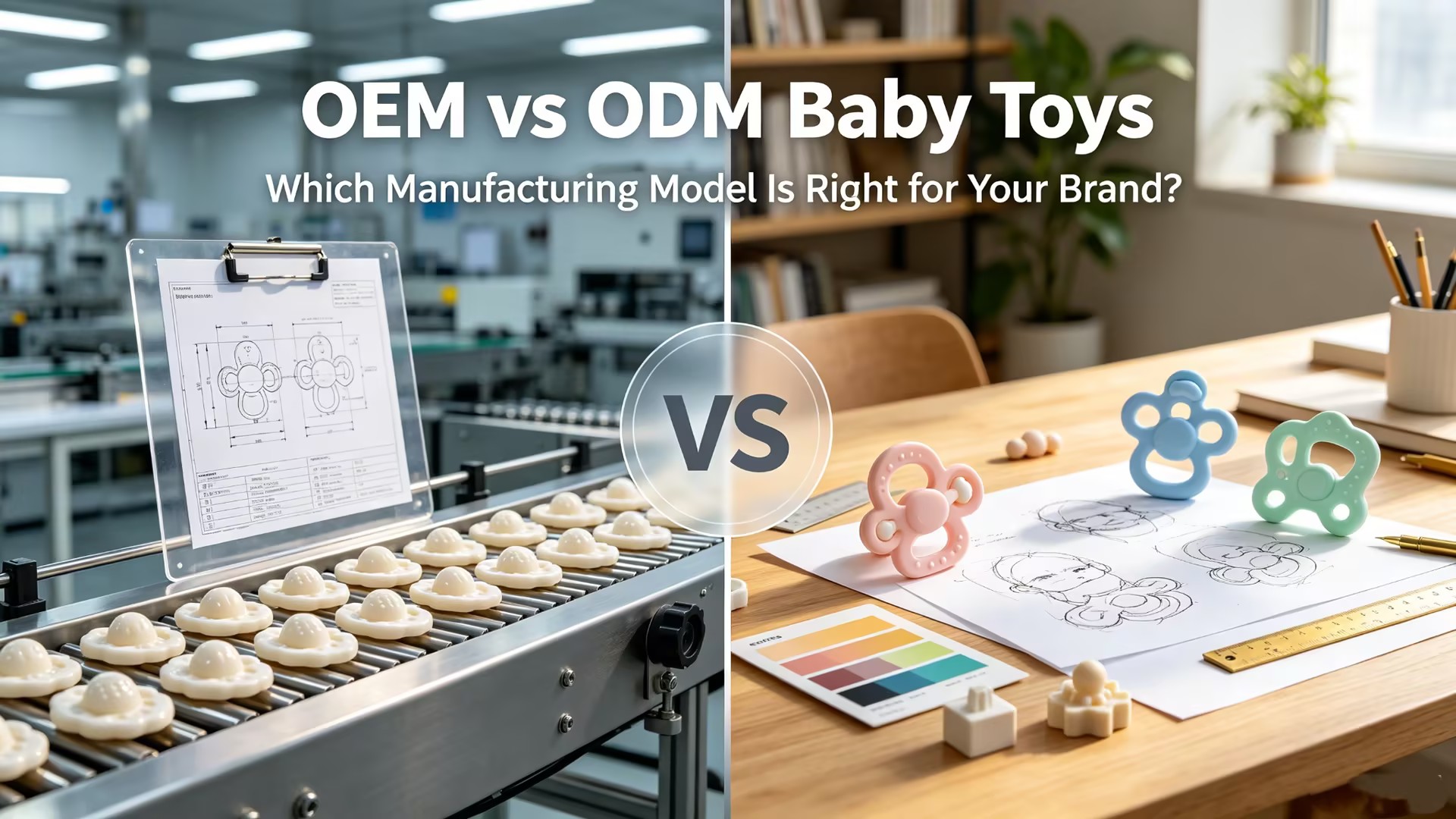
If you are planning to launch your own custom‑designed sensory‑play rubber‑toy collection, our OEM team can help you develop textured, infant‑friendly shapes. Learn more about custom‑product creation at our OEM & ODM Baby Toy Manufacturing page.
Natural Rubber and Sustainability: A Key Selling Point
Sustainability remains one of the strongest marketing drivers behind the growth of natural rubber baby toys. For 2026 baby‑product marketing campaigns, renewable materials and eco‑friendly credentials are no longer optional add‑ons; they are core selling features many shoppers actively search for. Even so, brands must market sustainability claims carefully to avoid greenwashing risks.
Authentic natural rubber is harvested from living rubber‑trees through bark‑tapping, a non‑destructive harvesting process. Rubber‑trees can produce usable latex sap for 25‑30 years, making raw natural rubber a fully renewable resource. Once their usable lifecycle ends, pure, additive‑free natural rubber toys for babies will biodegrade under industrial compost conditions, unlike silicone and plastic toys which will persist for centuries in landfill.
It is important for B2B buyers to understand one critical limitation: natural rubber toys will not break down inside standard household landfill environments. This fact should be clearly communicated in your product marketing text, to avoid misleading consumers and greenwashing accusations.
When building your sustainable product story, you can go one‑step‑further by sourcing rubber toys with low‑waste factory production, plastic‑free retail packaging and ethically harvested raw‑material supply chains. Certifications such as GOLS (Global Organic Latex Standard) can add an extra layer of credibility to your eco‑marketing messaging, though certified inventory carries a higher wholesale price‑tag.
Before you advertise your new eco‑toy product‑line, always request lab documentation and material‑composition reports from your manufacturer to back‑up every sustainability claim you publish.
Opportunities for Baby Brands in the Natural Rubber Toy Market
The fast‑rising consumer demand for natural rubber baby toys opens‑up multiple actionable growth opportunities for baby‑product brands, online retailers and wholesale distributors in 2026. Whether you run a well‑established baby store or a brand‑new startup, there is a strategic market pathway suited for your business goals.
1. Launch a dedicated natural‑rubber product sub‑line
Add a small, carefully curated collection of natural rubber teething toys and natural rubber bath toys to your existing baby‑goods catalogue. This lets you capture eco‑parent traffic without completely rebuilding your product portfolio.
2. Bundle natural rubber toys within gift‑set assortments
Natural rubber sensory toys make excellent additions to baby‑shower gift bundles, newborn welcome kits and teething relief packages. Bundling creates higher average‑order‑values and introduces rubber toys to shoppers who may not have searched for them directly.
3. Combine natural rubber and silicone product ranges
Running dual material lines gives your brand flexibility: silicone toys serve families avoiding latex, while natural rubber toys for babies appeal to sustainability‑focused customers. This balanced strategy maximises your total audience reach.
4. Create exclusive private‑label natural rubber products
Once you have validated market demand with wholesale stock items, you can move into custom OEM private‑label manufacturing to launch unique, brand‑exclusive natural rubber baby toys that competitors cannot source. Exclusive custom shapes help you build long‑term brand loyalty and reduce price‑driven marketplace competition.
Before you begin large‑volume production, you should complete thorough supplier due‑diligence, request physical samples, and verify third‑party safety test‑reports for ASTM F963, EN 71 and REACH compliance. You can review our multi‑stage quality assurance workflow to understand our manufacturing safety standards on our Factory & Quality Control Overview.
Future of Natural Rubber Baby Toys
Looking forward beyond 2026, market indicators suggest the popularity of natural rubber baby toys will continue its upward trajectory, rather than fading as a short‑lived trend. Several long‑term factors will keep pushing consumer interest higher.
First, global public awareness around plastic waste and children’s environmental health will keep growing. Parents will continue seeking out renewable‑resource toy alternatives, maintaining steady demand for natural rubber toys for babies.
Second, product innovation within the natural‑rubber toy sector will expand. Manufacturers are developing new textured sensory shapes, hybrid teething‑and‑rattle designs, improved low‑protein latex formulations and colourful mineral‑dyed toy options. This expanding product selection will give brands even more creative SKU choices to launch fresh collections of natural rubber teething toys and natural rubber bath toys.
Third, tighter global toy‑safety regulations are expected to push‑out low‑quality, cheap synthetic toy imports. Higher safety standards will create more market space for well‑tested, premium‑grade natural rubber infant products.
That said, the natural‑rubber toy market also faces ongoing challenges. Raw‑latex price volatility, supply‑chain limitations and the permanent latex‑allergy concern will always remain important considerations for buyers. Successful brands will plan ahead by building diversified product portfolios and transparent allergen‑warning labelling.
Final Thoughts for Wholesale & Private‑Label Buyers
The rise in popularity of natural rubber baby toys represents far more than a passing social‑media trend. In 2026, it reflects a deep‑rooted, permanent shift in parent priorities: a growing desire for safe, plant‑based, screen‑free, sensory‑rich play products for babies. For baby‑product brands, natural rubber teething toys and natural rubber bath toys offer an outstanding opportunity to connect with eco‑conscious consumers, differentiate your catalogue and unlock new revenue streams.
Success in this category depends on three key actions: prioritising independent safety testing, communicating material benefits and limitations honestly, and selecting a reliable, compliance‑focused rubber‑toy manufacturer as your long‑term supply partner.
If you are ready to explore adding natural rubber toys for babies to your brand’s collection, Natural Baby World can support you through every stage, from wholesale stock orders all the way to full custom OEM private‑label development. Submit your project request to receive tailored sourcing guidance from our in‑house product team.
Ready to Source Natural Rubber Baby Toys?
Our compliance‑specialised sourcing team can help you build your natural‑rubber toy product line for 2026 and beyond.
Request Your Free Quote TodayFrequently Asked Questions
Q: Why are natural rubber baby toys so popular right now?
A: Natural rubber toys are trending because parents want non‑toxic plant‑based alternatives to plastic, screen‑free sensory play options and sustainable, eco‑friendly infant products. Soft, chew‑friendly natural rubber teething toys are especially high‑demand among teething families.
Q: Are natural rubber bath toys safe for babies?
A: Solid, one‑piece moulded natural rubber bath toys are safe when manufactured to international toy safety standards. Hollow‑style rubber bath toys carry mould‑growth risks from trapped water and should be avoided.
Q: Can I mix natural rubber toys and silicone toys in my product catalogue?
A: Yes. Many successful baby‑goods brands offer both material options, serving eco‑focused shoppers and families with latex‑sensitivity concerns at the same time.
Q: What is the best way to start selling natural rubber toys for my brand?
A: Most new buyers begin with low‑risk wholesale stock orders to test market feedback, then progress to custom OEM private‑label natural rubber baby toys once consumer demand is proven.
Natural Rubber vs Silicone Baby Toys: Which Is Better for Brands?
Natural Rubber Baby Toys: Complete Guide for Brands & Buyers