Screen-Free Baby Toys: Why Sensory Play Is Growing in 2026
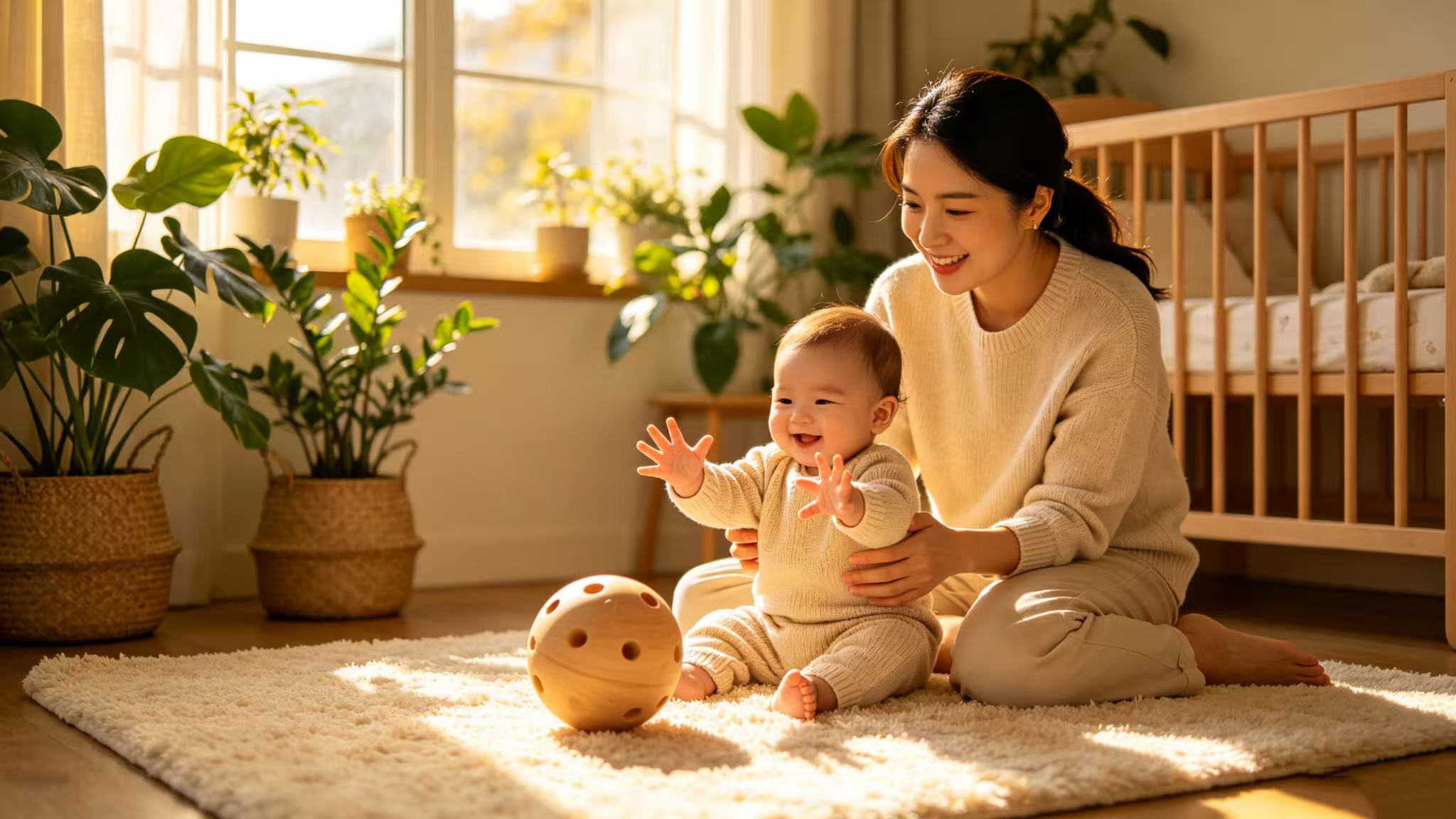
After a decade of screens entering every corner of early childhood, 2026 is witnessing a decisive shift. Parents, pediatricians, and toy buyers are returning to screen free baby toys — simple, tactile, hands-on products that engage a baby's senses without batteries, flashing lights, or algorithm-driven content. This is not nostalgia; it is a data-backed trend reshaping product development, retail buying, and brand positioning across the US, EU, and UK markets.
For B2B buyers and brand owners, understanding why sensory play is growing — and how to build a product line around it — is essential for staying competitive in 2026. This guide explores the five pillars driving the screen-free movement: tactile play, hands-on play, sensory exploration, open-ended play, and parent-child interaction. We also examine why natural materials are the natural partner to this trend, and how buyers can evaluate and source screen-free sensory toys with confidence.
The 2026 Screen-Free Shift: Why Now
Several converging forces are pushing the baby toy market away from screens and toward sensory, hands-on products. First, pediatric guidance has become more explicit. Major health bodies increasingly recommend limiting or avoiding screen time for children under 18 months, citing concerns about attention span, language development, and sleep quality. Parents are listening — and they are translating that guidance into purchasing decisions.
Second, the limitations of battery-operated "entertainment" toys have become apparent. A toy that flashes, plays music, and responds with pre-recorded phrases may capture a baby's attention for a few minutes, but it does so through passive stimulation. The baby is not creating, exploring, or problem-solving — they are consuming. Parents and early childhood educators describe this as "passive input" versus "active engagement," and the distinction is now a core buying criterion.
Third, the Montessori and Waldorf philosophies have moved from niche to mainstream. Concepts like "less is more," "open-ended play," and "real materials" are now common in parenting blogs, social media, and retail merchandising. Brands that can credibly position their products within this framework — backed by safety certifications and developmental design — are capturing premium shelf space and higher margins.
For B2B buyers, the message is clear: screen free baby toys are not a passing fad. They are a structural shift in what parents want, what retailers stock, and what regulators and health bodies endorse. The brands that build around sensory, hands-on, natural-material play now will define the category for the rest of the decade.
Tactile Play: The Power of Touch
Touch is the first sense to develop in the womb, and it remains the primary way babies learn about their world for the first year of life. Tactile play — exploring different textures, temperatures, weights, and resistances — is not just enjoyable for babies; it is essential for neural development.
When a baby grasps a textured natural rubber ball, runs their fingers over a ribbed silicone teether, or squeezes a soft fabric cube, their brain is processing a rich stream of tactile information. Each texture stimulates different receptors in the fingertips, sending signals to the somatosensory cortex and building neural pathways that support fine motor skills, hand-eye coordination, and even language development. Research in developmental psychology consistently links rich tactile experience in infancy to later cognitive and motor milestones.
Screen-based toys, by contrast, offer almost no tactile variety. A flat glass surface or a single plastic button delivers uniform, predictable feedback — the opposite of what a developing brain needs. This is why textured natural rubber toys, fabric activity books, and wooden stacking rings are experiencing such strong demand: they deliver the tactile richness that screens cannot.
For product developers, tactile design means intentional variety within a single toy. A natural rubber sensory ball might combine smooth areas, raised bumps, ribbed bands, and soft spurs — each offering a different tactile experience. A fabric cube might include crinkly panels, satin tags, knitted textures, and a hidden bell. The goal is to give tiny hands a reason to keep exploring.
As a product example, the Textured Natural Latex Sensory Ball for Babies demonstrates how multiple raised textures on a single soft, chewable ball can engage tactile exploration while also supporting grasping and teething — a textbook screen-free sensory design.
Hands-On Play: Active vs. Passive Engagement
The distinction between active and passive engagement is central to the screen-free movement. A battery-operated toy that lights up and plays music when a button is pressed is essentially passive: the baby initiates a simple action, and the toy delivers a pre-programmed reward. The baby does not need to think, experiment, or adapt. They press the button, watch the lights, and wait for the next stimulus.
Hands-on play is different. It requires the baby to be the active agent — to reach, grasp, shake, stack, drop, transfer from hand to hand, and explore cause and effect through their own actions. A wooden rattle does not make sound unless the baby shakes it. A stacking cup does not stack unless the baby places one inside another. A textured ball does not roll unless the baby pushes it. In every case, the baby is the one making things happen.
This active engagement is what developmental psychologists call "agentive play" — the baby experiences themselves as the cause of events in their environment. This builds confidence, curiosity, and a sense of mastery that passive entertainment simply cannot deliver. It also supports the development of executive functions: attention, working memory, and cognitive flexibility, all of which are foundational for later learning.
For B2B buyers, evaluating a toy's "hands-on quotient" means asking: Does this toy require the baby to do something, or does it do things to the baby? The best screen-free toys are those that are inert until the baby engages with them — they respond to action rather than initiating it. This design principle, rooted in Montessori philosophy, is now a mainstream buying criterion.
For buyers mapping product categories across developmental stages, Best Natural Baby Toys for Early Development offers a structured look at how teething, bath, sensory, and stacking toys each support hands-on, active engagement at different ages.
Sensory Exploration: Building Brain Connections
Sensory play is often reduced to "textured toys," but it is far more comprehensive. True sensory exploration engages multiple senses simultaneously — touch, sight, sound, and even taste and smell — and creates cross-sensory connections in the developing brain.
A natural rubber rattle, for example, engages touch (the soft, flexible surface), sight (the color and shape), and sound (the gentle rattle when shaken). If the baby brings it to their mouth — which they will — it also engages taste and the tactile receptors inside the mouth. This multi-sensory input is exactly what an infant brain needs to build the neural networks that underpin perception, coordination, and cognitive processing.
Developmental neuroscience refers to this as "multi-sensory integration" — the brain's ability to combine information from different senses into a unified experience. Babies who have rich multi-sensory play opportunities develop this integration faster and more robustly than those whose play is dominated by a single sense (such as visual input from a screen). The practical implication for toy design is clear: products that engage multiple senses without being overwhelming are the gold standard.
It is important to distinguish between "sensory-rich" and "sensory-overloading." A toy that flashes bright lights, plays loud music, and vibrates simultaneously may seem sensory-rich, but it is actually overloading — the baby cannot process one stimulus before the next arrives. This can lead to overstimulation, fussiness, and shortened attention spans. Screen-free sensory toys, by contrast, tend to offer gentle, controllable sensory input that the baby can explore at their own pace.
For the youngest babies — from birth to three months — sensory design is especially critical because their visual acuity is still developing and they rely heavily on touch and sound. Newborn Toys 0-3 Months: A Guide to Safe and Sensory-Rich Natural Latex Toy Development provides a detailed look at how sensory features (soft textures, gentle rattles, high-contrast colors) are engineered for the earliest developmental stage.
Open-Ended Play: Creativity Without Limits
Open-ended play is play that has no fixed outcome, no single "right" way to play, and no pre-determined endpoint. A set of stacking cups is open-ended: the baby can stack them, nest them, bang them together, fill them with water, or use them as a hat. A battery-operated toy that plays a specific song when a specific button is pressed is closed-ended: there is one way to interact with it, and one outcome.
The value of open-ended play for babies and toddlers is enormous. It supports creativity, problem-solving, flexible thinking, and sustained attention. Because there is no "correct" way to play, the baby is free to experiment, make discoveries, and repeat actions that interest them. This kind of self-directed play is deeply engaging — babies will often spend longer with a simple open-ended toy than with a complex electronic one, precisely because they are in control.
Open-ended play also supports the development of "executive function" skills — the cognitive processes that include working memory, inhibitory control, and cognitive flexibility. These skills are among the strongest predictors of later academic success, emotional regulation, and life outcomes. The early childhood years are the critical window for building these foundations, and open-ended play is one of the most effective ways to do so.
For B2B buyers, open-ended design is a product development philosophy as much as a feature set. It means choosing products that are simple, versatile, and durable — products that can be used in multiple ways across multiple developmental stages. A natural rubber ball is open-ended: it can be rolled, bounced, squeezed, chewed, chased, and used in countless games. A single-purpose electronic toy is used in one way and quickly outgrown. The open-ended toy delivers far more play value per dollar and far more developmental benefit per minute of play.
To see how open-ended categories like teething, sensory, and stacking toys can grow with a child across developmental stages, Natural Baby Toys That Support Early Growth explores how each category offers evolving play value from infancy into toddlerhood.
Parent-Child Interaction: The Social Dimension
One of the most significant but least discussed benefits of screen-free toys is their ability to facilitate parent-child interaction. When a baby plays with a screen, the parent is often a bystander — or worse, a competitor for the baby's attention. When a baby plays with a simple, hands-on toy, the parent is naturally drawn in: they demonstrate how to stack the cups, make the rattle sound, roll the ball, or name the textures. This joint play is one of the most powerful contexts for language development, social-emotional bonding, and cognitive growth.
Developmental psychologists call this "joint attention" — the shared focus of a parent and child on the same object or activity. Joint attention is a foundational skill for language acquisition, social communication, and emotional regulation. Babies who experience frequent joint attention during play tend to develop language faster, show more secure attachment, and demonstrate better social skills in toddlerhood. Screen-free, hands-on toys are ideal catalysts for joint attention because they are simple enough for a parent to join in and flexible enough for shared exploration.
Contrast this with a screen-based toy or tablet app. When a baby is engaged with a screen, the parent's role is often reduced to monitoring or limiting use. The screen itself becomes the "partner" in play, displacing the parent-child interaction that is so critical for development. This is not to say that all screen time is harmful — but it is to say that screen-free toys create natural, low-effort opportunities for parent-child bonding that screens simply cannot match.
For brands and retailers, this social dimension is a powerful marketing angle. Products that are explicitly designed for parent-child interaction — such as soft blocks that parents and babies stack together, or fabric books that parents read while baby touches the textures — resonate strongly with parents who want to be present and engaged in their baby's play. Positioning products as "connection tools" rather than just "toys" can differentiate a brand in a crowded market.
Natural Materials: The Sensory Advantage
The screen-free movement and the natural materials movement are not separate trends — they are deeply intertwined. Parents who seek out screen-free, sensory-rich toys are also disproportionately likely to seek out natural, non-toxic, eco-friendly materials. The two preferences reinforce each other, creating a powerful product segment: natural-material, screen-free sensory toys.
Natural rubber latex is particularly well-suited to this segment. It is soft, flexible, and warm to the touch — qualities that plastic cannot replicate. It offers rich tactile variety: smooth surfaces, raised textures, ribbed patterns, and soft protrusions can all be molded into a single toy. It is naturally bacteriostatic and hypoallergenic, making it safe for mouthing. And it is biodegradable, aligning with the eco-conscious values of the same parents who choose screen-free play.
Wood is another natural material that pairs perfectly with screen-free sensory play. Wooden toys offer a warm, solid texture that is distinct from both plastic and rubber. They can be sanded smooth, finished with non-toxic water-based paints or natural oils, and designed for stacking, sorting, and building. Wooden toys have a timeless quality that appeals to parents seeking durable, heirloom-style products that can be passed between children.
Organic cotton and natural fabrics round out the natural-material sensory toolkit. Fabric activity books, soft blocks with different textures, crinkle toys, and tag blankets all offer rich tactile and auditory experiences in a soft, safe format. Organic cotton is free from the pesticides and synthetic fertilizers used in conventional cotton production, aligning with the health and eco-conscious values of screen-free parents.
For buyers evaluating natural-material toys, the key is to look beyond marketing claims and verify material sourcing, safety certifications, and manufacturing quality. Natural rubber latex toys should be tested to ASTM F963 and EN 71 standards, with documentation of deproteinization (to reduce allergenic proteins) and low-nitrosamine vulcanization. Wooden toys should use FSC-certified timber and non-toxic finishes. Fabric toys should use GOTS-certified organic cotton where possible.
For a deeper understanding of why natural rubber is gaining traction as both a safe and sustainable toy material, Why Natural Rubber Baby Toys Are the Future of Safe Parenting Choices explores the material's safety advantages, compares it with synthetic alternatives, and explains why parents are making the switch.
How B2B Buyers Build a Screen-Free Line
For B2B buyers, brand owners, and product developers, building a screen-free sensory toy line requires more than selecting products without batteries. It requires a strategic approach to category mix, developmental staging, material selection, and supplier evaluation. Here is a practical framework:
1. Map Categories Across Developmental Stages
A strong screen-free line covers the full age range from 0–3 months through 24+ months, with products that evolve with the baby's developing skills. Key categories include: high-contrast and rattle toys (0–3 months), textured teethers and sensory balls (3–6 months), stacking and nesting toys (6–12 months), bath toys and cause-and-effect toys (9–18 months), and open-ended building and pretend play (18+ months).
2. Prioritize Multi-Sensory, Open-Ended Design
Select products that engage multiple senses (touch, sight, sound) without overstimulation, and that can be played with in more than one way. Avoid single-purpose, button-activated toys. Look for products that grow with the child — a toy that is interesting at 6 months and still engaging at 18 months delivers far more value.
3. Choose Natural, Verifiable Materials
Prioritize natural rubber latex, FSC wood, and GOTS organic cotton. Require full material documentation, safety test reports (ASTM F963, EN 71), and certification evidence. Avoid products with vague "natural" claims that are not backed by third-party verification.
4. Evaluate Suppliers on Developmental Design Expertise
The best screen-free toy suppliers understand child development, not just manufacturing. Ask suppliers about their design process: Do they consult pediatric occupational therapists or early childhood educators? Do they test products with real babies? Can they explain the developmental rationale for each feature? Suppliers who can answer these questions are partners, not just factories.
5. Build a Cohesive Brand Narrative
A screen-free line should tell a consistent story: natural materials, developmental design, parent-child connection, and screen-free play. This narrative should run through product descriptions, packaging, marketing content, and retail merchandising. Brands that communicate this story clearly and authentically capture the premium segment of the market.
For buyers looking for a supplier that combines natural rubber latex expertise with sensory-focused product development, the Organic Natural Latex Teethers collection demonstrates how certified organic materials, deproteinization, and multi-texture sensory design come together in a screen-free product line — serving as a reference model for category building.
Conclusion
The rise of screen free baby toys in 2026 is not a reaction against technology — it is a reaffirmation of what babies actually need for healthy development: rich tactile experience, active hands-on engagement, multi-sensory exploration, open-ended creativity, and warm parent-child interaction. Screens cannot deliver these things. Simple, well-designed, natural-material toys can — and that is why the category is growing.
For B2B buyers, the opportunity is significant but requires intentionality. Building a screen-free sensory line means selecting products that are genuinely developmental, not just battery-free. It means choosing natural materials that are verifiably safe and sustainable. It means partnering with suppliers who understand child development as well as manufacturing. And it means telling a brand story that connects with parents who want the best for their babies — and who are willing to pay for it.
The brands that get this right will not only capture market share in 2026; they will define the next era of baby play. Screen-free, sensory-rich, natural-material toys are not the past. They are the future — and the future is already here.
How to Choose a Natural Rubber Baby Toy Supplier
Sustainable Natural Rubber Baby Toys: Materials, Production & Packaging