Natural Latex Toy Supply Chain Resilience: Multi-Origin Sourcing & Data-Driven Inventory Optimization
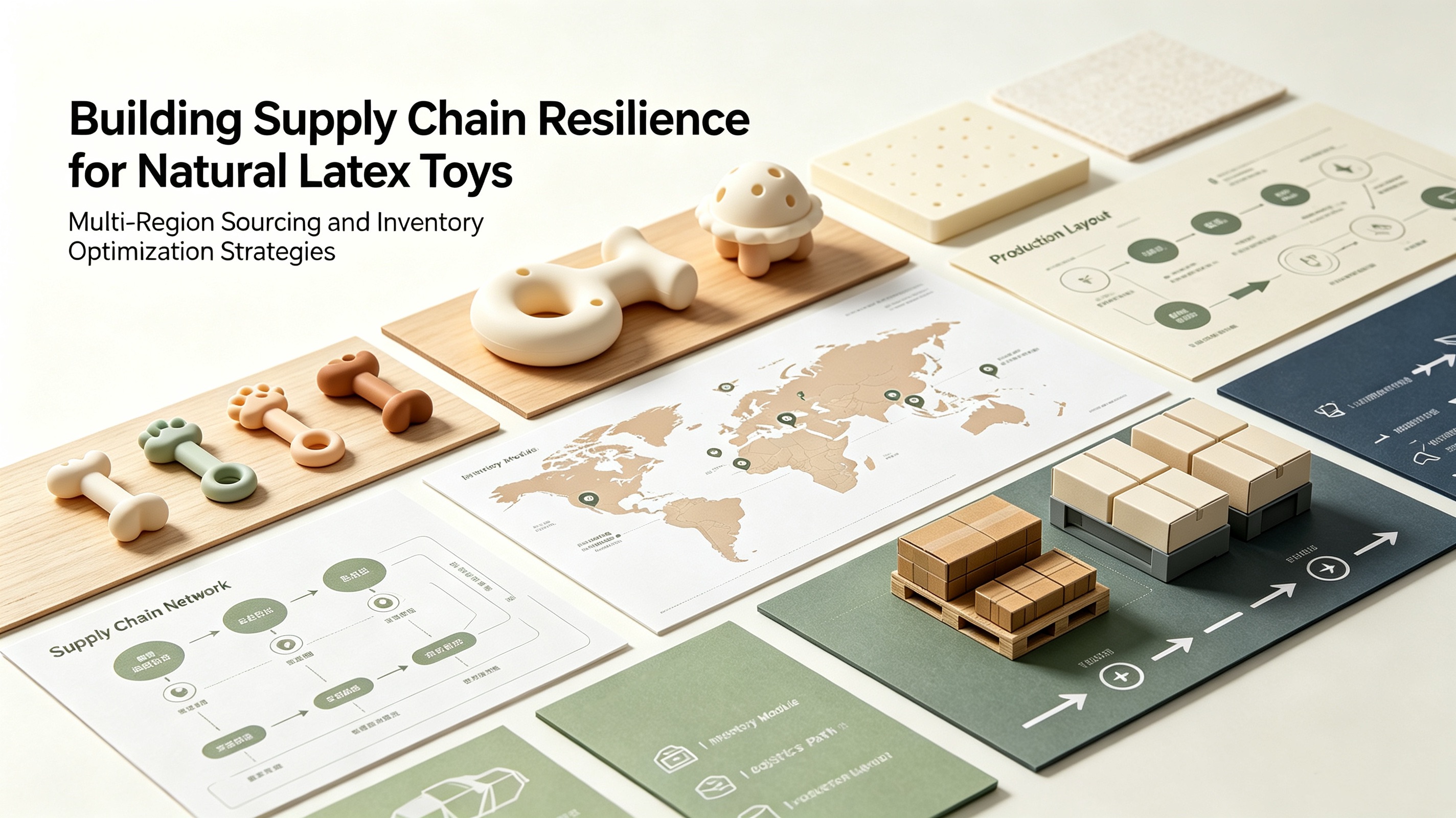
Table of Contents
- Executive Summary: Supply Chain Volatility Threatening Natural Latex Infant Toy Brands
- Baby Product Sourcing Risk Comparison: Thailand, Vietnam & China Latex Raw Material Base
- Data-Backed Safety Stock Calculation Model for Infant Toy Inventory Optimization
- Infant Toy Logistics Disruption Full Emergency Response Plan
- Editable Natural Latex Toy Multi-Origin Supply Chain Map Template
- Step-by-Step Framework to Build Resilient Multi-Location Toy Supply Chain
- FAQ Schema Block for Featured Snippet Capture
- Conclusion & Industry Action CTA
Executive Summary: Supply Chain Volatility Threatening Natural Latex Infant Toy Brands
Global natural latex infant toy brands face persistent upstream and downstream shocks: seasonal latex output slumps, EUDR zero-deforestation regulatory barriers, port congestion, blank sailings and raw material price volatility. Single-country baby product sourcing creates fatal toy supply chain fragility—any regional disruption triggers raw material shortages, factory shutdowns and cross-border infant toy logistics delays, leading to stockouts, lost cross-border sales and damaged brand reputation.
This guide delivers actionable resilience strategies built around three core pillars:
- Diversified multi-origin raw material sourcing across Thailand, Vietnam, China to offset regional supply risks
- Standardized quantitative safety stock model (demand fluctuation × supply lead time × service level) to cut overstock while eliminating stockouts
- End-to-end infant toy logistics contingency workflow covering ocean, air, warehousing and customs disruptions We also provide a ready-to-use supply chain map template for brands, OEM factories and cross-border importers to visualize upstream latex plantations, processing factories, logistics hubs and global distribution nodes. Internal link: Explore our complete raw material audit toolkit for baby product sourcing naturalbabyworld.com/baby-product-sourcing
Baby Product Sourcing Risk Comparison: Thailand, Vietnam & China Latex Raw Material Base
Thailand, Vietnam and China form the three core nodes of global natural latex toy supply chains. Each region carries unique production, policy, climate and logistics risks; balanced multi-location sourcing offsets unilateral vulnerability for toy supply chain resilience.
1 Thailand: World’s Largest Natural Latex Raw Material Producer
Core Advantages
- Global No.1 natural rubber output, stable high-quality liquid latex for infant teether production
- Mature desensitization processing technology, residual latex protein easily controlled under 50μg/g to meet EU/US baby toy safety standards
- Complete upstream plantation-to-processing vertical integration for consistent batch traceability
Key Supply Risks
- 90% raw latex supplied by scattered smallholder farmers, difficult full EUDR deforestation traceability implementation before 2027 compliance deadline
- 40% rubber trees over 30 years old with 30% lower yield; annual heatwaves/floods cut peak harvest volume sharply
- Concentrated production geography; monsoon natural disasters can halt nationwide latex collection for 2–4 weeks
- Ocean logistics port concentration at Laem Chabang; seasonal vessel congestion extends transit lead times by 7–14 days
Sourcing Application: Primary high-grade desensitized latex supplier for EU/US premium infant toy SKUs
2 Vietnam: Cost-Effective Secondary Latex Supply Hub
Core Advantages
- Mid-tier raw material cost, flexible small-batch processing for mid-market baby product lines
- Geographical proximity to China manufacturing base, short inland cross-border transit
- Government-supported rubber plantation expansion, steady raw material output growth YoY
Key Supply Risks
- 63% smallholder rubber fails EUDR zero-deforestation documentation; EU shipments face detention risks post-2026 regulation enforcement
- Central Highlands flood & leaf blight disease recurring annually, creating quarterly raw material supply gaps
- Limited advanced low-protein latex processing capacity; high allergy complaint risk for unrefined batches
- Fewer dedicated infant-grade latex testing laboratories, extra third-party certification lead time
Sourcing Application: Backup mass-market latex supply for APAC & Latin America low-margin toy SKUs
3 China: Integrated Finished Toy Manufacturing & Domestic Latex Buffer
Core Advantages
- Complete one-stop infant toy production chain: latex refining, molding, safety testing, packaging and cross-border logistics under single jurisdiction
- Domestic synthetic natural rubber buffer stock to offset ASEAN raw material shortages
- Fast inland warehousing, air freight and dedicated cross-border e-commerce toy logistics lines with predictable lead times
- Full ASTM F963, EN71, FDA food-contact certification infrastructure
Key Supply Risks
- Reliant on ASEAN imported raw latex; international trade tariffs and export restrictions raise material cost volatility
- Seasonal factory labor shortages during Spring Festival extend production lead times by 10–20 days
- Higher manufacturing overhead vs Thailand/Vietnam, compressing gross margin for entry-level latex toys
Sourcing Application: Core finished goods production base, emergency inventory buffer & fast-turn premium toy manufacturing
Regional Sourcing Risk Comparison Table
表格
| Dimension | Thailand | Vietnam | China | Mitigation Strategy for Toy Supply Chain |
|---|---|---|---|---|
| Raw Material Stability | High (global top producer) | Medium (climate volatile) | Medium (import-dependent) | 60% Thailand primary, 25% Vietnam backup, 15% China domestic buffer |
| EUDR Compliance Risk | High traceability upgrade cost | Severe (most smallholders non-compliant) | Low (import batch certification) | Separate EU-market latex batches sourced exclusively from certified Thai plantations |
| Logistics Lead Time to EU/US | 30–42 days ocean | 28–40 days ocean | 22–35 days ocean + fast air freight option | Dual ocean + air emergency shipping lane setup |
| Raw Material Price Volatility | Medium | High | Low (domestic stock control) | Fixed-price quarterly supply contracts with all three regional vendors |
| Infant-Grade Processing Capacity | Premium-focused limited volume | Mass-market large volume | Full spectrum small/large batch | Tier 1 multi-sensory toys Thailand; basic teethers Vietnam; custom R&D China |
Data-Backed Safety Stock Calculation Model for Infant Toy Inventory Optimization
Traditional fixed-cycle buffer inventory wastes capital on natural latex toys (high raw material holding cost, seasonal demand swings). This standardized quantitative safety stock formula aligns with baby product sourcing volatility, with three core variables: demand fluctuation, supply cycle lead time, target customer service level.
Core Safety Stock Formula for Natural Latex Infant Toys
Safety Stock = Z (Service Level Factor) × σD (Demand Standard Deviation) × √LT (Square Root of Supply Lead Time)
Variable Definition Tailored to Toy Supply Chain
- Z = Service Level Factor (target in-stock rate for infant toy SKUs)
- 95% fill rate (mass market baby products): Z=1.65
- 98% fill rate (cross-border e-commerce core SKUs): Z=2.05
- 99% fill rate (premium EU/US multi-sensory latex toys): Z=2.58
- σD = Demand fluctuation: Standard deviation of weekly sales volume over past 6 months (captures holiday/teething season demand spikes)
- LT = End-to-end supply cycle (total lead time in weeks): Raw latex procurement + overseas manufacturing + infant toy logistics transit + customs clearance
Practical Calculation Case Study (Multi-Sensory Latex Teether, Amazon EU Core SKU)
- Target service level: 98% → Z=2.05
- Weekly demand standard deviation σD = 120 units
- Total supply lead time LT = 6 weeks
- √LT = √6 ≈ 2.45
- Safety Stock = 2.05 × 120 × 2.45 = 603 units
Supporting Inventory Optimization Rules for Baby Product Sourcing
- Split safety stock across 2 regional 3PL warehouses (China + EU fulfillment center) to cut infant toy logistics reallocation delays
- Adjust σD quarterly: boost safety stock by 40% pre-holiday season (Black Friday, Christmas, baby shower peak demand)
- Reduce safety stock for slow-moving niche latex toys (60% baseline value) to lower latex raw material holding costs
- Link safety stock thresholds to multi-origin sourcing triggers: when warehouse inventory hits safety stock floor, activate Vietnam/China backup raw material suppliers within 72 hours
Infant Toy Logistics Disruption Full Emergency Response Plan
Natural latex toy infant toy logistics disruptions fall into four core categories: raw material transit delays, ocean shipping breakdowns, customs inspection hold-ups, regional warehouse shutdowns. This tiered contingency plan minimizes stockout impact for cross-border baby product sourcing.
Tier 1: Raw Material Sourcing Disruption (Thailand/Vietnam Latex Shortage)
- Pre-set dual backup suppliers across the other two production regions with pre-negotiated priority order terms
- Activate China domestic synthetic natural rubber buffer stock for 30-day production emergency coverage
- Pause low-margin basic latex toy SKU production, allocate all available raw materials to high-revenue multi-sensory teether lines
Tier 2: Ocean Freight Disruption (Blank Sailings, Port Congestion, Container Shortages)
- Dual transport lane strategy: 80% regular sea freight, 20% reserved air freight quota for fast-moving core infant toy SKUs
- Long-term contract with 2+ independent freight forwarders specializing in baby product sourcing to avoid carrier monopolization
- Pre-book peak-season container capacity 90 days in advance; secure dedicated 40GP toy shipping containers for latex goods
Tier 3: Customs & Regulatory Logistics Hold (EUDR, EN71 Safety Inspection Detention)
- Separate EUDR-certified Thai latex production batches with full plantation geotraceability documentation
- Attach complete third-party test reports (low-protein latex, VOC, heavy metal) to all shipment customs declarations
- Retain local customs brokerage teams in Hamburg, Los Angeles and Shanghai specializing in infant toy compliance clearance
Tier 4: Regional Warehouse & Fulfillment Disruption
- Distributed inventory layout: split finished latex toy stock across minimum 3 geographically separated 3PL warehouses
- Cross-border stock transfer SLA: 48-hour inter-warehouse infant toy logistics redistribution via ground/air express
- Temporary direct factory drop-shipping workflow activated if primary fulfillment center halts operations
Editable Natural Latex Toy Multi-Origin Supply Chain Map Template
Brands may customize this structural map for internal operations, supplier audits and cross-border baby product sourcing presentations.
Supply Chain Map Nodes & Flow Structure
- Upstream Raw Material Node (3 Parallel Sourcing Branches)
- Node A: Thailand Certified Latex Plantations → Low-Protein Latex Processing Factory (EU Premium SKU Input)
- Node B: Vietnam Mass Rubber Smallholders → General Latex Refinery (APAC Mass-Market SKU Input)
- Node C: China Domestic Synthetic Rubber Reserve + Minor Imported Latex Buffer
- Midstream Manufacturing Node
- Integrated China Latex Toy Molding Factory (Primary Production Hub)
- Contracted Thailand/Vietnam Satellite Assembly Workshops (Overflow Seasonal Production)
- Downstream Infant Toy Logistics Node (Dual Transport Routes)
- Ocean Freight Route: Factory Port → Cross-Ocean Vessel → Destination Country Port → Customs Clearance → Regional 3PL Warehouse
- Emergency Air Freight Route: Factory Airport → International Cargo Flight → Local Fulfillment Center
- End Market Distribution Node
- EU Independent Stations / Amazon EU Warehouses
- North America Amazon / Etsy Baby Vertical Stores
- APAC Shopee, Lazada & Local Maternity Retail Chains
Map Customization Tips
- Color-code nodes by risk level: Green (Low Risk China Hub), Yellow (Medium Vietnam Supply), Orange (High Compliance Risk Thailand Smallholders)
- Add real-time KPI data overlays: Raw material lead time, logistics transit days, current safety stock coverage weeks
- Embed supplier contact & emergency logistics provider links for rapid crisis response
Step-by-Step Framework to Build Resilient Multi-Location Toy Supply Chain
Combining baby product sourcing diversification, quantitative inventory control and infant toy logistics emergency protocols, implement this 6-stage roadmap:
- Complete Thailand/Vietnam/China supplier risk audit, classify SKUs by raw material grade and target market compliance rules
- Lock quarterly fixed-price raw material contracts with 1 primary + 2 backup vendors across the three regions
- Deploy the standardized safety stock calculation model for every latex toy SKU, set automated inventory reorder triggers
- Sign dual ocean + air freight logistics partnerships, formalize all disruption contingency SLAs in written contracts
- Roll out distributed multi-warehouse inventory layout, upload editable supply chain map to cross-functional operation teams
- Conduct quarterly supply chain stress tests: simulate Thai latex harvest failure, port blank sailings and EUDR customs holds to refine response workflows
FAQ Schema Block (Optimized for Google Featured Snippets)
Q1: Why multi-origin Thailand/Vietnam/China baby product sourcing improves toy supply chain resilience?
A1: Each latex production region faces independent climate, policy and logistics risks. Diversified sourcing eliminates single-point failure; if one region’s raw material supply collapses, the other two hubs can cover production demand without full stockouts of natural latex infant toys.
Q2: How to adjust the safety stock model for seasonal infant toy demand spikes?
A2: Increase the demand standard deviation σD value by 30%–50% 2 months before baby gifting holiday seasons (Christmas, Mother’s Day, baby shower season), recalculate safety stock and advance raw material sourcing orders via multi-region suppliers.
Q3: What is the top infant toy logistics disruption risk for EU cross-border latex toy shipments?
A3: EUDR zero-deforestation regulation non-compliance. Vietnam smallholder latex batches lack traceability records, leading to customs detention; brands must source all EU-bound latex toys exclusively from certified Thai plantation supply chains to avoid logistics delays.
Q4: Can small cross-border baby brands implement multi-origin toy supply chain strategy with limited capital?
A4: Yes. Small sellers can adopt mixed sourcing: core high-margin SKUs source Thai certified latex, low-volume entry teethers use Vietnam raw material, and hold minimal China finished goods buffer inventory, paired with tiered safety stock to control holding costs.
Conclusion & Industry Action CTA
Building resilient natural latex toy supply chains no longer relies on intuitive sourcing decisions; balanced Thailand/Vietnam/China multi-region baby product sourcing, data-driven safety stock inventory models and structured infant toy logistics emergency plans form the three irreplaceable pillars to mitigate raw material, regulatory and shipping risks.
The quantitative safety stock formula, tiered logistics contingency workflow and editable supply chain map template deliver immediate operational value for toy brand procurement, production and logistics teams, eliminating blind single-country sourcing exposure while balancing inventory holding costs and customer in-stock service levels.
Smart Manufacturing Upgrade for Natural Latex Toys: Automated Dipping Lines & AI Visual Inspection Technology
2025 Natural Latex Infant Toy Trend Report – Three Core Directions: Safety Upgrade, Diversified Senses, Sustainability