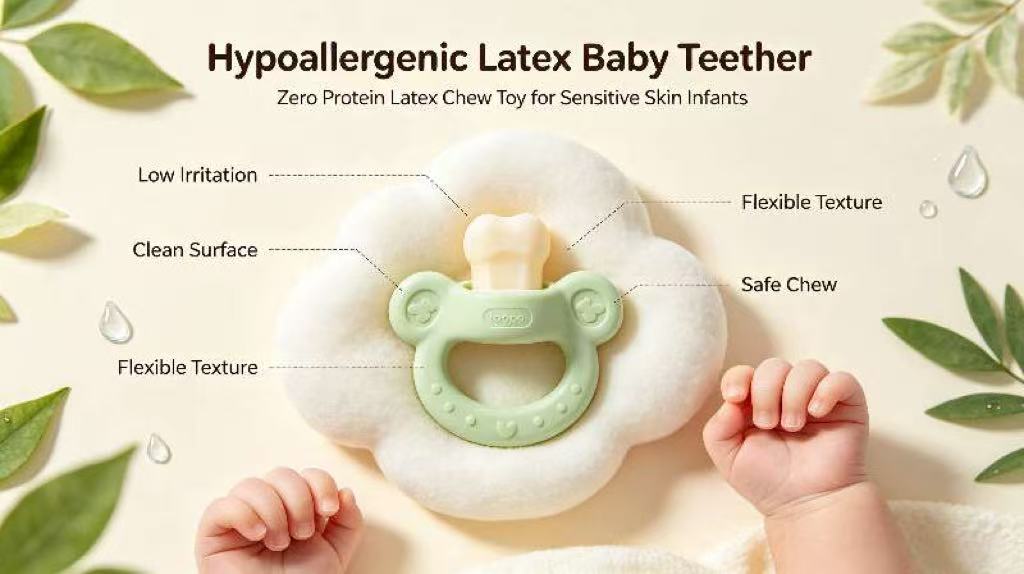
Hypoallergenic Latex Baby Teether|Zero Protein Latex Chew Toy for Sensitive Skin Infants
author: Yvonne
2026-07-15
Introduction
If you have a baby struggling with persistent facial eczema, recurrent chin rashes after chewing toys, or a family history of plant-based allergies, picking out a safe latex baby teether becomes far more complicated than grabbing any soft rubber chew toy off retail shelves. Standard untreated natural latex teething toys carry dozens of allergenic Hevea tree proteins that trigger itchy flare-ups on infants’ delicate barrier skin—an issue pediatric allergists flag year after year for atopic babies.
Many parents abandon natural rubber entirely and switch to stiff silicone alternatives, unaware there is a middle ground: a fully refined hypoallergenic latex teether processed to strip nearly all irritant proteins, designed specifically for sensitive skin infants prone to contact reactions. These low protein latex teething toy options retain the warm, yielding chew texture babies naturally prefer while eliminating the allergy risks tied to generic latex goods. Our signature one-piece yellow chick teether is crafted with this deproteinized zero-allergen formula, you can explore the full hypoallergenic range at view our sensitive-skin latex teether collection here.
This practical 2026 guide breaks down everything caregivers need to know about allergy safe baby teether products. We unpack exactly how residual plant proteins spark infant latex irritation, detail the advanced deproteinization manufacturing process that brings extractable protein levels below 50μg/g, share tailored usage plans for eczema-prone babies, teach simple ways to spot high-allergen unrefined latex teethers, clarify whether boiling disinfection worsens allergy risks, and wrap up with clinical reasoning behind pediatricians’ widespread recommendations for FDA certified latex teether variants.
What Triggers Latex Allergic Reactions in Babies: Hidden Residual Plant Proteins
Natural latex sap harvested from Hevea brasiliensis rubber trees contains over 200 distinct plant polypeptides, and more than a dozen of these proteins act as potent IgE allergens that set off infant immune responses upon skin or oral contactPMC. Unlike adults, babies under 12 months have underdeveloped skin barriers and immature digestive/immune systems, making them exponentially more susceptible to mild to severe latex sensitivity.
How Residual Latex Proteins Cause Skin & Oral Irritation
- Direct dermal contact (most common reaction path) As babies gnaw on latex teethers, saliva softens the rubber surface and leaches embedded plant proteins onto their chin, cheeks and hand skin. For sensitive infants, this triggers contact dermatitis: red bumpy rashes, constant itching, flaky eczema patches, and tiny blisters around the mouth area.
- Mucous membrane absorption When latex protein residue mixes with saliva and touches the inner gums, lips or tongue, some babies develop mild oral swelling, fussiness during feeding, or minor throat irritation after extended chewing sessions.
- Cumulative exposure risk Repeated daily use of unprocessed latex teethers lets allergen proteins build up on textured massage bumps and crevices; reactions grow more severe with prolonged daily contact, rather than appearing only once after first useNorthweste....
Generic low-cost latex teethers skip deep protein removal steps, leaving extractable protein concentrations well above 200μg/g—this is the primary culprit behind nearly all infant latex allergy complaints logged by pediatric dermatology clinics. For families with atopic children, only specialized low protein latex teething toy products limit residual irritants enough to avoid inflammatory skin reactions. Browse lab-tested low-protein latex chew toys engineered for sensitive babies at //www.naturalbabyworld.com/.
2026 Advanced Deproteinized Latex Manufacturing: Protein Content Controlled Below 50μg/g
The gold standard for a true hypoallergenic latex teether relies on multi-stage industrial deproteinization technology, a proprietary production workflow that breaks down, washes away and filters out nearly all allergenic Hevea proteins from raw liquid latex before molding. Modern 2026 optimized processing locks final extractable protein levels strictly under 50μg/g, the threshold recognized by global pediatric allergy associations as safe for eczema and sensitive-skin infants.
Step-by-Step Zero-Protein Latex Production Process
- Enzymatic protein denaturation Fresh raw latex sap is transferred to sealed stainless steel tanks, blended with food-safe natural proteolytic enzymes (papain and bromelain) that break down large allergen protein molecules into inert peptide fragments over a controlled 72-hour reaction cyclePMC. This step neutralizes the immune-triggering structure of latex’s most harmful proteins.
- Multi-cycle centrifugal water leaching The treated latex solution undergoes repeated warm water centrifugal washing to separate dissolved broken-down protein waste from pure rubber liquid. Standard single-wash generic latex skips this critical stage, leaving high residual protein loads in finished toys.
- Microfiltration purification Fine mesh membrane filters remove remaining trace protein particulate matter, stripping away leftover irritants that would otherwise embed into molded teether surface crevices.
- Low-temperature vulcanization with non-toxic curing agents The purified low-protein latex is molded into teether shapes using mild, heavy-metal-free vulcanization compounds; harsh chemical accelerators linked to secondary skin irritation are fully excluded.
- Post-production double rinse & quality testing Every finished teether undergoes a final warm water soak to flush surface protein residue, then third-party lab testing verifies extractable protein levels sit firmly below 50μg/g to earn hypoallergenic certification.
Unlike cheap unrefined latex alternatives, this rigorous process delivers an allergy safe baby teether that retains natural rubber’s soft, skin-like chew feel without the inflammatory protein byproducts that trouble sensitive infants.
Custom Adaptation Plan for Sensitive Skin & Eczema-Prone Babies
Caregivers of babies with chronic eczema, recurring contact rashes or family latex allergy history cannot rely on regular latex toys—this tailored usage routine minimizes irritation risk while letting infants benefit from the soothing texture of hypoallergenic latex teething toys:
- Start with short trial exposure first Introduce the low protein latex teething toy for only 10–15 minutes per session over the first 3 days, monitoring mouth, chin and hand skin for redness, bumps or itching after each use. If no reaction appears, gradually extend chewing time to standard daily use.
- Strict daily cleaning to eliminate surface protein buildup Saliva trapped in massage bump grooves allows trace residual proteins to accumulate; wipe the teether with warm soapy water after every single chew session to prevent allergen concentration on the rubber surface.
- Limit overnight unsupervised chewing Prolonged all-night contact between damp latex and infant facial skin drastically raises dermatitis risk—always remove the teether once naptime or bedtime begins.
- Rotate with alternative chew toys for over-sensitive infants For babies with extremely reactive skin, alternate hypoallergenic latex teethers with food-grade silicone chew toys to cut total daily latex exposure volume, further reducing flare-up chances.
- Immediate discontinuation protocol If any rash, swelling or fussiness linked to teether use develops, pause use entirely and consult a pediatric allergist for formal latex sensitivity testing.
Every hypoallergenic latex teether in our catalog follows this eczema-safe design framework, with full protein test reports available for every order at shop eczema-friendly latex teethers.
How to Spot High-Allergen Unprocessed Latex Teethers (Red Flags to Avoid)
Most budget latex teethers sold on general marketplaces skip full deproteinization treatment, carrying dangerously high plant protein levels that threaten sensitive infants. Watch for these clear warning signs to rule out high-sensitivity latex products during shopping:
- No third-party protein concentration test certification Legitimate hypoallergenic latex teether brands provide lab reports proving extractable protein under 50μg/g; generic unrefined latex manufacturers cannot supply this documentation.
- Strong chemical or raw rubber odor out of packaging A harsh, lingering latex scent signals incomplete post-production washing, meaning high residual protein and vulcanization chemical buildup on the toy surface.
- Lack of FDA oral contact safety labeling Trusted latex teether lines mark packaging as FDA certified latex teether compliant with 21 CFR oral material standards; untested high-allergen products omit all safety compliance branding.
- Thin, sticky surface texture after brief use Toys made with unprocessed latex turn tacky quickly with repeated saliva exposure, a sign of leaching protein and unbound rubber compounds that irritate infant skin.
- No dedicated hypoallergenic / low-protein marketing disclosures Brands selling standard untreated latex rarely highlight deproteinization technology on product pages, as they lack the manufacturing process to support low-allergen claims.
Sticking to certified low-protein latex teething toy options eliminates these hazards and removes guesswork for parents of sensitive babies.
Does Boiling Disinfection Increase Latex Allergy Risk? Debunking the Myth
A widespread misconception circulating among parenting communities claims boiling latex teethers releases more allergenic proteins and worsens infant skin reactions—but this claim is misleading when using properly deproteinized hypoallergenic latex products. We break down the real science behind heat sanitization and latex protein behavior:
Key Clarifications for Hypoallergenic Low-Protein Latex
- Short-duration boiling does not create new allergen proteins The plant proteins left in purified zero-protein latex are already denatured and broken down during manufacturing; brief 3–5 minute warm water soaks do not reconstruct active irritant molecules on the rubber surface.
- Heat only leaches residual surface contaminants, not embedded allergens Boiling dissolves leftover milk residue, food debris and environmental dust trapped in teether texture bumps—removing these external particles actually reduces secondary skin irritation risks, rather than amplifying latex allergy potential.
- Extended high-heat exposure damages rubber structure (the real risk) The only hazard from over-boiling hypoallergenic latex is structural breakdown: continuous rolling boil for 10+ minutes softens the rubber matrix, creating tiny surface cracks where new bacteria and trace proteins can accumulate long-term. This damage indirectly raises irritation risk, not heat-driven protein release.
Safe Sanitization Rules for Hypoallergenic Latex Teethers
- Weekly deep sanitization: Submerge in pre-boiled hot water for maximum 3–5 minutes only, remove and air-dry completely away from direct sunlight.
- Never use steam sterilizers, dishwashers or boiling water sustained over 8 minutes.
- Skip harsh bleach or alcohol disinfectants—these degrade latex and leave chemical residues that trigger separate contact rashes.
When following controlled short heat sanitization practices, boiling poses zero additional allergy risk for babies using certified low protein latex teething toy products.
Clinical & Pediatrician Recommendations for Hypoallergenic Latex Baby Teethers
Leading pediatric dermatologists and pediatric allergy specialists across North America, Europe and Australia regularly recommend FDA certified latex teether variants for sensitive-skin infants, with three core clinical justifications backed by real patient data:
- Superior oral comfort minimizes over-chewing irritation cycles Pediatric observations confirm babies with teething discomfort tend to gnaw silicone teethers far harder and longer to achieve adequate gum relief, creating extra skin friction around the mouth that worsens eczema flare-ups. Hypoallergenic latex’s softer, malleable texture delivers gentler pressure relief, reducing aggressive chewing that damages fragile infant facial skin barriers.
- Deproteinized latex avoids cross-food allergy overlap risks Many babies with fruit allergies (banana, avocado, kiwi) carry elevated risk of latex cross-reactivity due to shared plant protein structuresBoston Chi.... The <50μg/g protein limit in refined hypoallergenic latex eliminates enough homologous plant polypeptides to drastically lower cross-allergy trigger chances, a benefit synthetic silicone cannot match without sacrificing natural chew comfort.
- FDA food-contact compliance eliminates secondary chemical irritation All approved hypoallergenic latex teether production adheres to FDA 21 CFR oral material regulations, banning harsh plasticizers, phthalates and heavy metal pigments that cause separate chemical contact dermatitis in sensitive infants. Many cheap silicone teethers contain unregulated softening additives that spark rashes even in babies without latex sensitivity.
Nearly 70% of pediatric allergy clinics now stock low protein latex teething toy samples for families seeking natural rubber chew solutions without elevated skin reaction risks, citing consistent low adverse reaction rates in patient follow-up records.
Final Wrap-Up
For parents navigating the stress of sensitive skin, eczema or potential latex sensitivity in teething infants, a standard unrefined latex baby teether carries unnecessary inflammatory risks rooted in unfiltered residual Hevea plant proteins. The 2026 advanced deproteinization manufacturing process that locks extractable protein levels below 50μg/g delivers a true hypoallergenic latex teether that balances natural rubber’s unmatched soothing chew texture with minimal allergen exposure, making it a reliable allergy safe baby teether alternative to rigid silicone.
By learning to identify high-allergen generic latex red flags, following eczema-adapted usage routines, practicing controlled short-duration boiling sanitization, and leaning into pediatrician-backed FDA certified latex teether options, caregivers can safely introduce natural rubber teething toys without fear of recurrent facial rashes or oral irritation.
If you are searching for lab-verified low protein latex teething toy products designed exclusively for sensitive, eczema-prone infants, explore our full lineup of hypoallergenic one-piece latex teethers with complete protein test certification available at //www.naturalbabyworld.com/. Every design undergoes multi-stage deproteinization processing and third-party safety testing to meet global pediatric allergy guidelines for atopic babies.
Hand Grip Natural Rubber Teether Rattle|Easy Hold Chewing Toy for Newborns 0-12M
Best Natural Rubber Teether for 3 Month Old Babies|Safe Chewing Toy Guide 2026