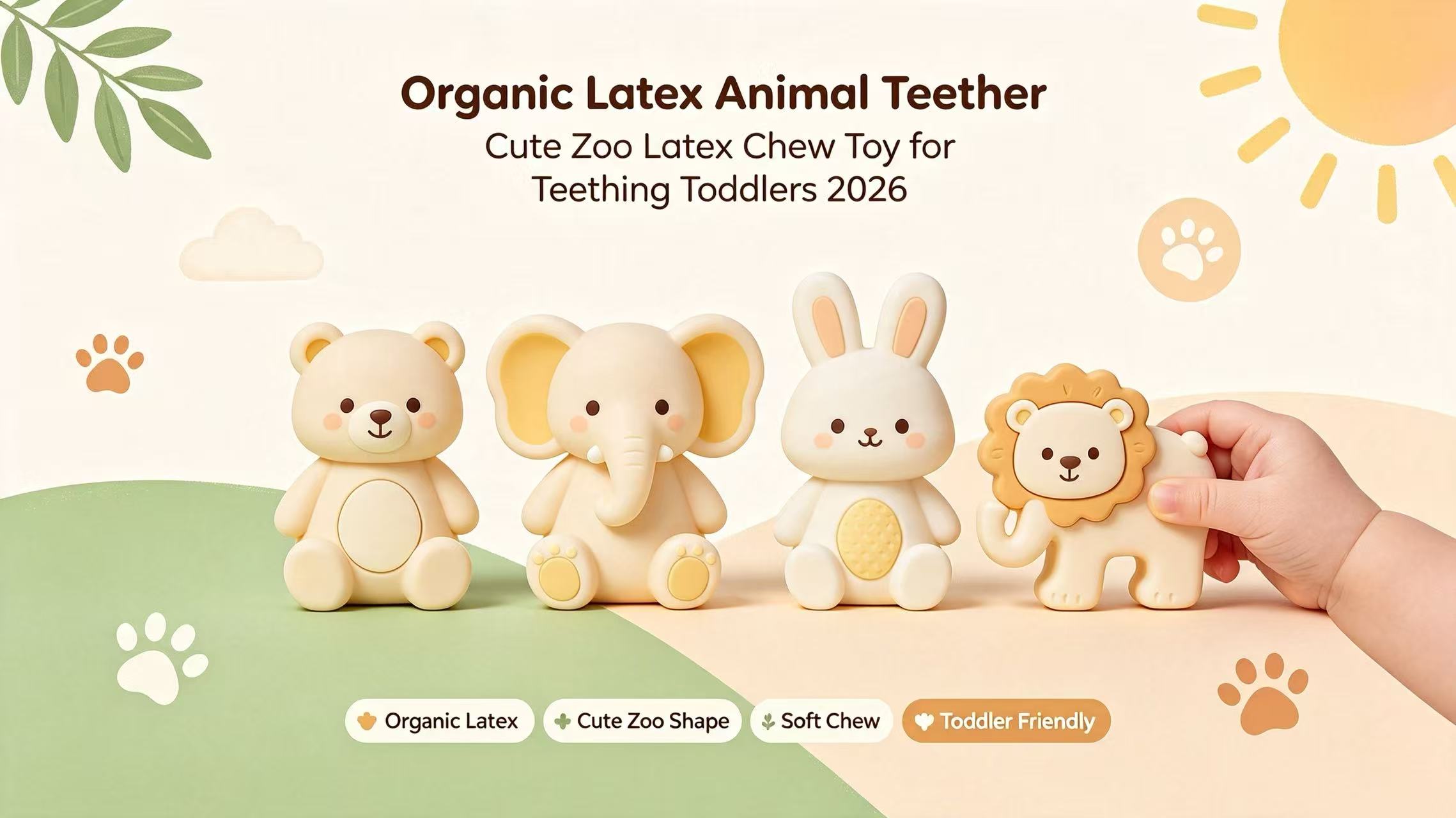
Organic Latex Animal Teether|Cute Zoo Latex Chew Toy for Teething Toddlers 2026
author: Yvonne
2026-07-17
Introduction
Walk through any baby retail shelf or cross-border toy store, and you’ll spot two clear teether categories: boring plain circular rings, and bright animal-shaped chew toys that instantly grab toddlers’ attention. But most cheap zoo teethers on the market rely on toxic plastic blends and artificial chemical dyes, leaving eco-focused parents stuck choosing between fun designs and infant safety. That’s where organic latex animal teether styles stand out—they blend adorable zoo character silhouettes with fully plant-based, non-toxic organic latex construction, striking the perfect balance of play appeal and zero-compromise oral safety for teething babies aged 3 months up to 3 years old.
Our bestselling yellow chick animal teether is one of the top-selling zoo teething toy designs built with certified organic latex and natural mineral pigments, loved by both fussy infants and sustainability-focused caregivers alike. You can explore our full range of bear, duck, rabbit and chick organic baby latex chew toy styles at browse all zoo-shaped organic latex teethers here. This 2026 buyer’s guide breaks down every core advantage of animal shaped latex teether products, covering kid-friendly cartoon design benefits, plant-based natural pigment technology, fully biodegradable organic latex eco value, multi-firmness gradient texture for every teething stage, and a direct safety comparison against conventional plastic animal teething toys loaded with hidden harmful chemicals.
Cute Zoo Animal Shapes Dramatically Boost Baby Acceptance of Teething Toys
Anyone who’s struggled to get a cranky teething toddler to pick up a plain rubber ring knows how much visual appeal impacts daily self-soothing. Pediatric early development specialists confirm animal shaped latex teether designs tap into infants’ natural curiosity toward recognizable cute creatures, solving one of the biggest daily battles for parents: getting babies to voluntarily use their chew toys instead of gnawing on clothing, crib rails or plastic remote controls.
- Familiar zoo characters hold longer play focus Soft rounded chick, duck, bear and bunny silhouettes mirror the animal imagery babies see in board books, nursery wall art and stuffed plush toys. Infants will reach out, grab and hold these latex zoo teethers unprompted, whereas generic flat ring teethers often get tossed aside within seconds. The distinct head, limb and tail contours also give tiny palms extra grip points, making them easier to grasp for younger teething toddlers.
- Play value extends beyond simple gum relief Unlike single-purpose round teethers, organic zoo latex chew toys double as lightweight sensory play items for bath time, stroller rides and floor play. Toddlers will shake, squeeze and examine the animal shapes independently, turning mandatory teething relief into low-stress fun without constant parental prompting. Many parents share their babies calm down faster during fussing episodes when handed a favorite animal teether versus a basic unprinted rubber ring.
- Soft cartoon lines eliminate visual overstimulation Every zoo teether design uses gentle, muted organic pigment tones and rounded facial features—no harsh sharp outlines or neon saturated hues that overstimulate sensitive infant eyes. The gentle visual aesthetic fits minimalist, natural nursery decor, a major selling point for modern eco-parent shoppers browsing retail and e-commerce listings.
If you’re searching for varied zoo teething toy silhouettes with organic latex safety standards, check out our full product lineup of farm and jungle animal chew toys at //www.naturalbabyworld.com/.
Natural Plant & Mineral Pigments: Zero Synthetic Dyes, Zero Oral Chemical Leaching
A major hidden risk on mass-market animal teething toys comes from cheap industrial colorants. Many plastic and low-grade latex zoo teethers use petroleum-based artificial dyes loaded with heavy metals that transfer onto babies’ gums during hours of chewing. All organic baby latex chew toy designs in our catalog rely exclusively on food-grade natural pigment extracts sourced from plants and inert mineral clays, with zero synthetic chemical color additives.
How Natural Latex Pigment Coloring Works
Color tones are created using concentrated plant extracts (turmeric for warm yellow, spinach clay for soft sage green, cocoa powder for neutral beige) mixed directly into purified organic latex before low-temperature vulcanization. No surface spray paints or peelable printed layers are added, eliminating the risk of color flaking off into baby’s mouth with repeated biting.
Core Safety Advantages Over Synthetic Dyes
- Pass strict oral migration testing compliant with FDA 21 CFR and OEKO-TEX Class 1 standards; no lead, cadmium or arsenic leaches out during saliva exposure
- Hypoallergenic formula free of chemical dye irritants that trigger perioral rashes on sensitive teething skin
- Color holds steady through repeated warm water sanitization, no fading or bleeding after weekly cleaning soaks
- Zero harsh chemical odor straight out of packaging—no lingering paint or dye fumes common on cheap plastic animal teethers
Many budget zoo teething toys use thin surface paint that wears thin after a month of heavy chewing, leaving bare unprocessed material underneath. Our integrated natural pigment molding locks color deep into the organic latex matrix, so every animal teether stays vibrant and safe through months of daily infant use.
Fully Degradable Organic Latex: Unmatched Environmental Eco Advantages
Beyond infant oral safety, organic latex animal teether materials deliver clear sustainability benefits that align with global zero-waste parenting trends, a critical selling feature for cross-border retail brands targeting eco-conscious buyers. Unlike synthetic plastic and silicone teething toys that sit in landfills for hundreds of years, certified organic latex is a fully renewable, biodegradable plant material harvested from sustainably managed Hevea rubber tree plantations.
- Renewable closed-loop raw material supply Organic latex sap is tapped from mature rubber trees without felling, a carbon-negative crop that absorbs CO2 as it grows. No fossil fuel feedstocks are used in raw material production, cutting the toy’s overall carbon footprint drastically compared to petroleum-based plastic alternatives.
- Complete home compostability at end of use Once the zoo teether reaches the end of its usable lifespan (typically 3–4 months of heavy chewing), it breaks down fully in standard home compost within 12 months, leaving no microplastic waste behind. Disposable plastic animal teethers, by contrast, never fully decompose and shed microplastic particles into soil and waterways as they degrade slowly over centuries.
- Non-toxic manufacturing waste streams Organic latex processing avoids harsh chemical plasticizers and curing agents used in synthetic toy production. Factory waste water and leftover latex scraps break down naturally without polluting soil or groundwater, meeting strict BSCI and environmental compliance standards for global manufacturing audits.
- Appeals to ESG-focused brand partners Wholesale distributors and large baby retail chains actively prioritize toy suppliers with fully biodegradable product lines. Stocking organic zoo latex chew toys helps brands hit sustainability marketing targets and stand out against competitors selling single-use plastic teething goods.
Multi-Hardness Gradient Design Matches Every Stage of Toddler Teething
One-size-fits-all softness is a common flaw in generic latex teethers—they either feel too firm for newborn swollen gums or too flimsy to soothe erupting back molars. Every animal shaped latex teether features a proprietary dual-density gradient molded structure with distinct soft and firm zones engineered for the full teething journey from 3 months to toddlerhood:
- Ultra-soft zones for early front tooth irritation (3–6 months) The animal’s large cheek, belly and ring body sections use lighter vulcanization for gentle, yielding texture that cushions tender, inflamed gum ridges as incisors break through. Newborns can chew these zones for hours without oral soreness or skin irritation around the mouth.
- Medium-firm massage bumps for middle teething (6–10 months) Small raised dotted nubs spread across the animal’s limbs, wings and paws offer targeted light pressure relief for sharp emerging canine teeth, massaging gum soreness without harsh stimulation.
- Dense firm protrusions for molar teething toddlers (10–36 months) Thicker, solid horn, beak and tail sections are molded with higher latex density to deliver deep pressure massage for painful back molars, a stage where softer single-density teethers fail to provide enough soothing resistance.
This tiered firmness layout means one single zoo teething toy adapts to every teething phase, eliminating the need to purchase separate chew toys for newborns and older toddlers. Retail buyers and parents alike value this all-in-one design that cuts household toy clutter and long-term purchasing costs.
Organic Latex Zoo Teethers vs Plastic Animal Toys: Clear Harmful Substance Risk Comparison
Plastic animal teething toys remain widely available on marketplaces, yet independent lab studies consistently flag dozens of hazardous chemical compounds that leach out during infant chewing—risks completely eliminated by certified organic baby latex chew toy construction. Below is a straightforward breakdown of the core safety gaps in plastic zoo teethers:
Hidden Toxic Chemicals Found in Conventional Plastic Animal Teethers
- Phthalate plasticizers (DEHP, DINP): Added to soften rigid PVC plastic; linked to long-term endocrine disruption in young children, banned for oral toys in EU and US but still present in unregulated cheap importsACCC Produ...
- BPA & bisphenol derivatives: Found in hard plastic animal heads and hollow cavities; estrogen-mimicking chemicals that absorb into saliva during extended mouthingPMC
- Heavy metal colorants: Low-cost plastic dyes contain lead, cadmium and mercury that rub off onto baby’s gums with repeated biting
- Flame retardant additives: Mixed into foam plastic zoo toys to meet flammability rules, releasing neurotoxic particles with heat and saliva contact
- Microplastic shedding: Thin plastic limbs crack and wear down with chewing, releasing tiny microplastic fragments infants swallow unknowingly
Zero Toxic Risk in Certified Organic Latex Animal Teethers
- No PVC, polyethylene or any petroleum plastic polymers used at any production stage
- Phthalate, BPA, flame retardant and heavy metal free, verified via third-party batch lab testing
- Integrated natural mineral plant pigments with no peelable surface paint to shed into baby’s mouth
- Elastic latex structure resists cracking under heavy chewing, with zero microplastic waste generated through normal use
Many parents switch from plastic zoo teethers after noticing persistent chin rashes and unexplained toddler fussiness linked to chemical leaching from plastic chew toys. Making the swap to organic latex zoo designs removes all these avoidable oral and skin exposure risks for teething little ones.
Final Wrap-Up
For caregivers and baby brand buyers balancing playful kid-approved design, infant oral safety and eco-friendly manufacturing, organic latex animal teether products are the gold standard zoo teething toy choice for teething toddlers in 2026. Their soft cartoon animal silhouettes encourage voluntary self-soothing, natural plant-based pigments eliminate synthetic dye chemical exposure, fully biodegradable organic latex cuts plastic waste footprints, and multi-gradient hardness zones deliver tailored gum relief across every teething stage—all while avoiding the long list of toxic additives hidden inside mass-market plastic animal chew toys.
Whether you’re a parent shopping for a single daily teething toy or a wholesale retailer sourcing a full zoo-themed organic baby latex chew toy collection for store shelves, these animal shaped latex teether designs check every box for safety, play value and sustainable branding. If you’d like to explore our full catalog of certified organic latex zoo teethers including chicks, ducks, bunnies and bears, view our complete product range with full safety certification documentation at //www.naturalbabyworld.com/. Every animal teether undergoes multi-stage deproteinization, natural pigment molding and gradient softness testing before mass production for global cross-border retail markets.
Natural Rubber Multi Stage Teether|Age Graded Chewing Toys for 4/6/9 Month Baby
Hand Grip Natural Rubber Teether Rattle|Easy Hold Chewing Toy for Newborns 0-12M